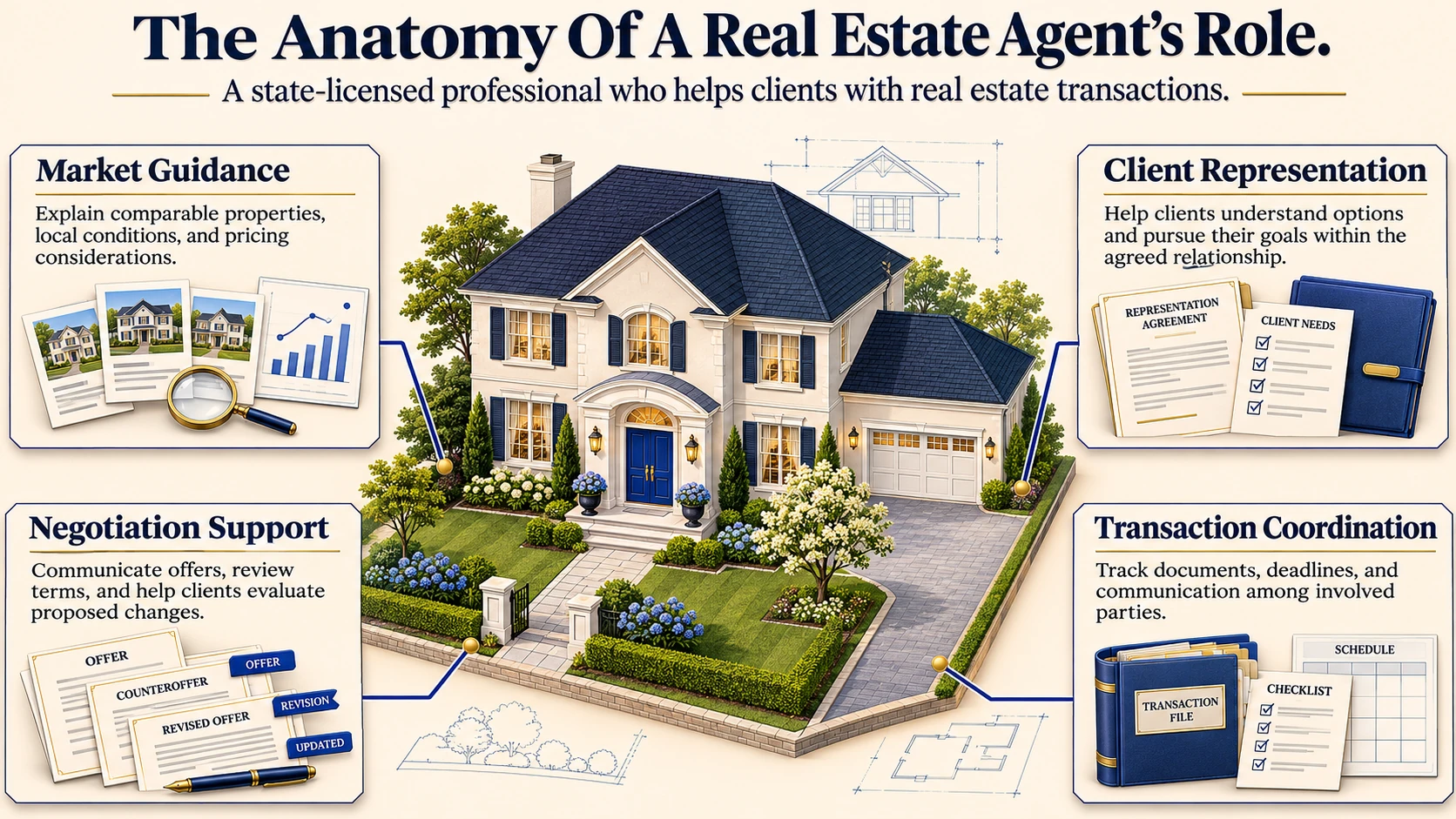
Real estate offers career opportunities for people who enjoy working with clients, researching properties, and helping others make important financial decisions. Agents assist buyers and sellers with property searches, pricing, negotiations, contracts, and closing procedures. Although the profession can provide scheduling flexibility and opportunities for independent business development, entering the industry requires education, licensing, and preparation.
Learning how to be a real estate agent starts with understanding the qualifications established by your state. Most aspiring agents must complete approved coursework, pass a licensing examination, and work with a licensed brokerage before representing clients. These steps establish the legal foundation for a career in property sales. Beyond licensing, successful agents need communication skills, local market knowledge, and effective business habits. Understanding both the regulatory requirements and everyday responsibilities can help you prepare for the challenges of entering the profession.
Research State Licensing Requirements Before Getting Started
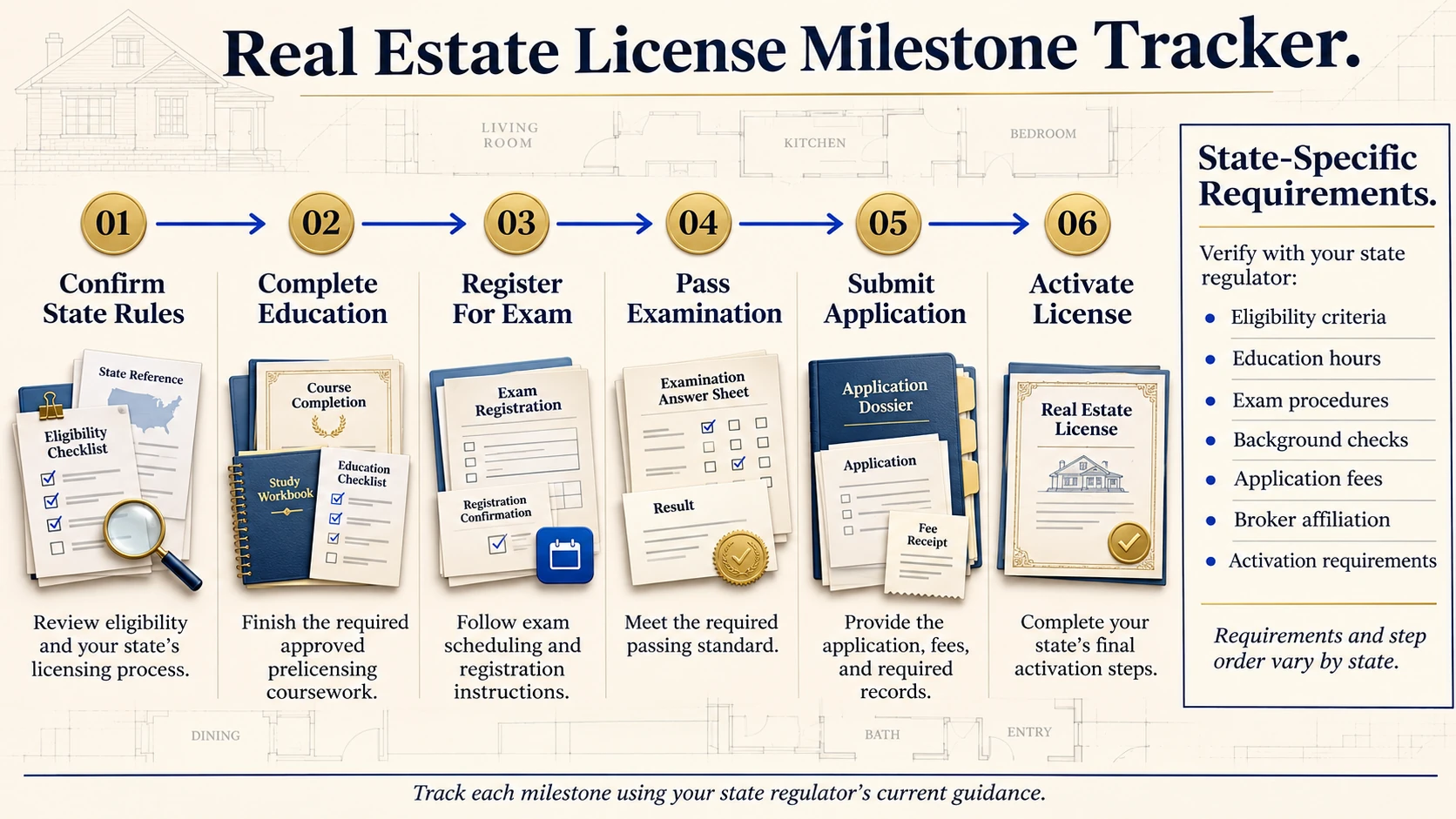
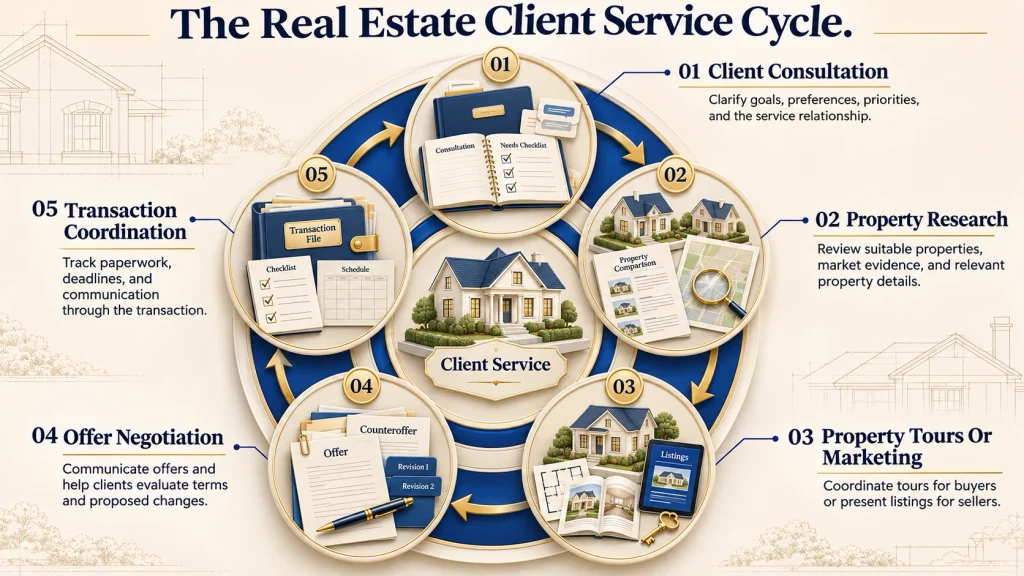
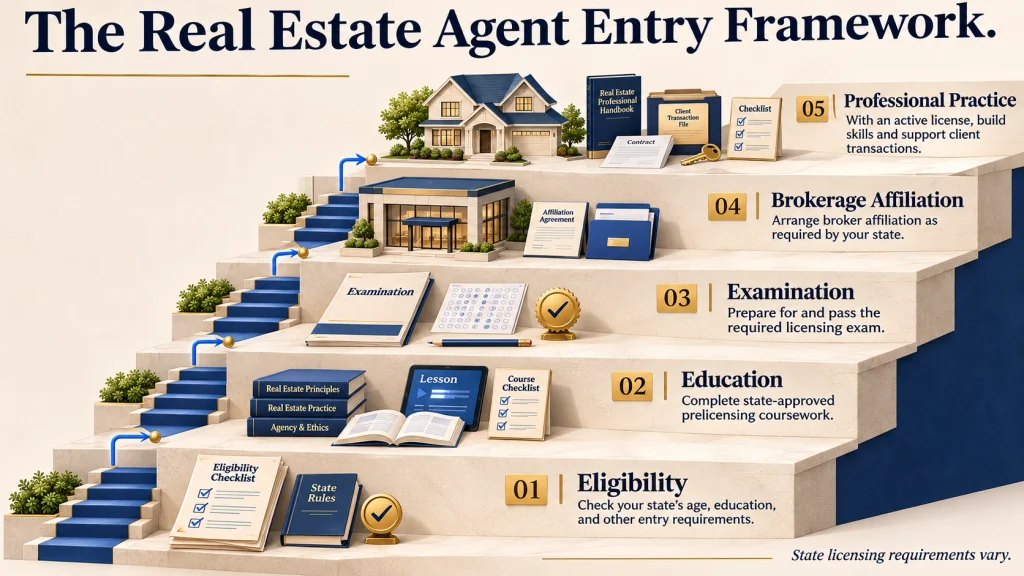
Every state establishes its own rules for real estate licensing, so the first step is identifying the requirements where you intend to work. Most states require applicants to meet a minimum age, complete approved education, pass an examination, and submit a license application. Some jurisdictions also require fingerprinting, background checks, or additional eligibility documentation. Requirements can change, making your state’s official real estate commission or licensing agency the most reliable starting point.
Understanding how to be a real estate agent also involves choosing the correct license category. Entry-level professionals may be classified as salespersons, sales agents, or associate brokers, depending on the jurisdiction. Broker licenses generally involve additional qualifications or experience. Before paying for education, confirm the required course hours, approved providers, examination procedures, and application deadlines. Researching these details early helps prevent delays and unnecessary expenses.
Complete Approved Real Estate Education And Training
Pre-licensing education introduces the legal and practical knowledge needed to represent property buyers and sellers. Courses commonly cover ownership rights, contracts, financing, agency relationships, property valuation, fair housing laws, and professional ethics. Required instructional hours vary considerably between states, with some jurisdictions requiring substantially more coursework than others. Selecting an approved school ensures your completed education meets the licensing authority’s requirements.
Students can often choose between online, classroom, and hybrid programs. Online learning may suit individuals balancing employment and family commitments, while in-person classes provide opportunities for direct interaction with instructors. When researching how to be a real estate agent, compare course costs, learning materials, completion deadlines, and examination preparation support. Regardless of the format, consistent study habits and a clear understanding of real estate terminology can improve your preparation for licensing.
Pass The Real Estate Licensing Examination
After completing the required coursework, most applicants must pass a licensing examination. Many states divide the test into national and state-specific sections. Common subjects include real estate contracts, financing, property ownership, agency responsibilities, and professional regulations. State-specific questions address local laws and licensing requirements. Examination formats, passing scores, and registration procedures differ, so applicants should review official testing instructions before scheduling their appointments.
Preparing effectively involves reviewing course materials, completing practice examinations, and studying unfamiliar concepts. Questions often require applying real estate principles to practical situations rather than simply memorizing definitions. Individuals learning how to be a real estate agent should develop a realistic study schedule and focus on subjects identified in the official examination outline. Candidates who do not pass initially may have opportunities to retake the test, subject to state rules and additional fees.
Apply For Your License And Complete Background Screening
Passing the examination is an important achievement, but it does not automatically authorize someone to represent clients. Applicants generally must submit a formal license application, provide proof of education and examination results, and pay applicable fees. Background checks and fingerprinting may also be required. Some states complete these procedures before examination registration, while others handle them during the licensing application process.
When planning how to be a real estate agent, allow time for administrative processing and document verification. Missing information, incorrect payments, or incomplete background screening can delay approval. Certain jurisdictions also establish deadlines for submitting applications after passing the examination. Keep copies of educational certificates, receipts, and official correspondence to simplify follow-up requests. Once approved, confirm whether your license is active or whether additional brokerage affiliation steps remain.
Choose A Brokerage That Provides Professional Support
Most newly licensed real estate sales agents must work under the supervision of a licensed broker. A brokerage provides oversight, transaction procedures, and access to resources needed for client representation. Selecting a supportive brokerage can be particularly valuable during the first year because new agents are still developing practical skills. Training programs, mentorship opportunities, commission arrangements, and administrative assistance should all influence your decision.
Before joining a company, ask about transaction fees, marketing expenses, technology tools, and expectations for generating clients. Some brokerages provide structured training and experienced mentors, while others emphasize independent business development. Individuals exploring how to be a real estate agent can also review real estate career insights to learn more about professional growth. Choosing a brokerage that matches your learning needs and business goals can make the transition into the industry more manageable.
Understand Career Costs And Income Expectations
Starting a real estate career requires an initial financial investment. Typical licensing expenses include education, examination registration, background screening, and application fees. Depending on the state and education provider, these costs may total several hundred dollars or exceed $1,000. Additional business expenses may include brokerage charges, professional memberships, multiple listing service access, marketing materials, and technology subscriptions. Preparing a budget before beginning can help prevent unexpected financial pressure.
Income expectations also deserve careful consideration. Many agents earn commissions from completed transactions rather than receiving predictable salaries. Compensation arrangements vary, and commission rates are negotiable rather than universally fixed. The U.S. Bureau of Labor Statistics provides information about employment, earnings, and career requirements for real estate professionals. Understanding how to be a real estate agent includes recognizing that developing consistent income may take time, especially while establishing your first client relationships.
Develop Practical Skills And Build Your Client Base
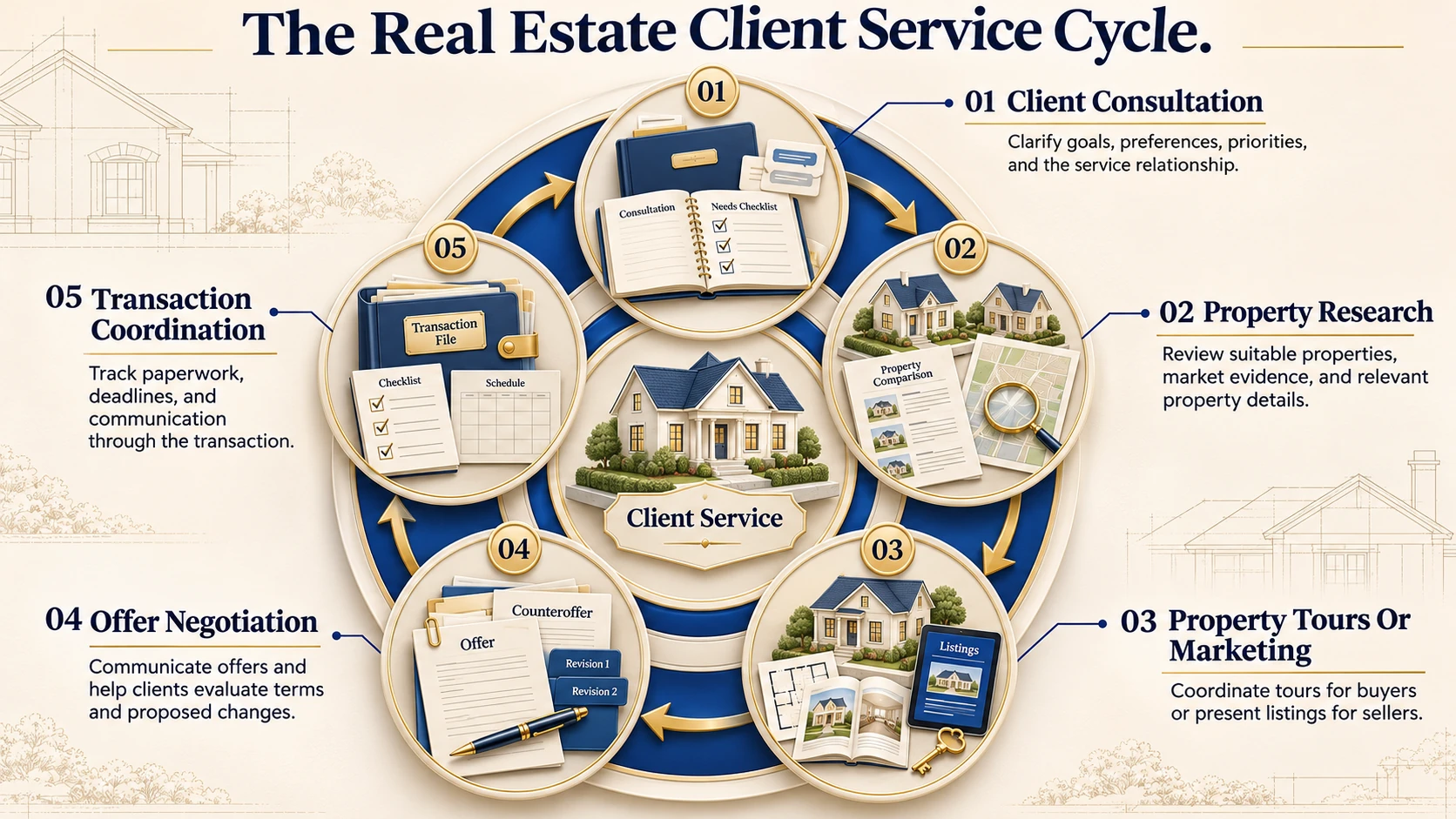
Licensing provides the legal qualifications needed to begin working, but professional success depends on practical skills. Real estate agents must communicate clearly, research property values, negotiate offers, and manage transaction deadlines. They also coordinate with lenders, inspectors, appraisers, and settlement professionals. New agents can develop these abilities through brokerage training, mentorship, and supervised transactions. Learning how experienced professionals handle challenging situations can improve confidence and decision-making.
Client acquisition is another major responsibility. Agents often build business through referrals, networking, community involvement, and online marketing. Maintaining relationships with previous clients can also create future opportunities. When considering how to be a real estate agent, remember that building trust requires consistent communication and reliable service. Developing a professional website, learning about local neighborhoods, and responding promptly to inquiries can help establish credibility without relying on unrealistic sales promises.
Maintain Your License And Continue Growing Professionally
Real estate professionals must satisfy ongoing regulatory requirements after receiving their licenses. Most states require periodic renewals and continuing education covering legal updates, ethical responsibilities, and professional standards. Some jurisdictions also require additional post-licensing education for new agents. Missing deadlines or failing to complete mandatory courses can affect your ability to practice. Maintaining organized records and monitoring licensing requirements helps prevent interruptions in professional activities.
Understanding how to be a real estate agent involves more than completing the initial licensing process. Long-term development requires adapting to changing market conditions, improving negotiation skills, and maintaining strong client relationships. Experienced professionals may pursue specialized training or eventually qualify for a broker’s license. Regularly evaluating business performance and continuing professional education can help agents improve their services while meeting the responsibilities of the profession.
Conclusion
Beginning a real estate career involves researching state requirements, completing education, passing examinations, and selecting a brokerage. Learning how to be a real estate agent helps aspiring professionals prepare for licensing expenses, understand income expectations, and develop the skills needed to represent clients responsibly.
For individuals exploring career opportunities in the industry, Coach Devin Hazen provides resources related to real estate and professional development. While earning a license establishes the foundation, practical experience, ethical conduct, and consistent relationship-building support long-term career growth. Agents who continue learning and adapt to client needs can build a more sustainable professional future.