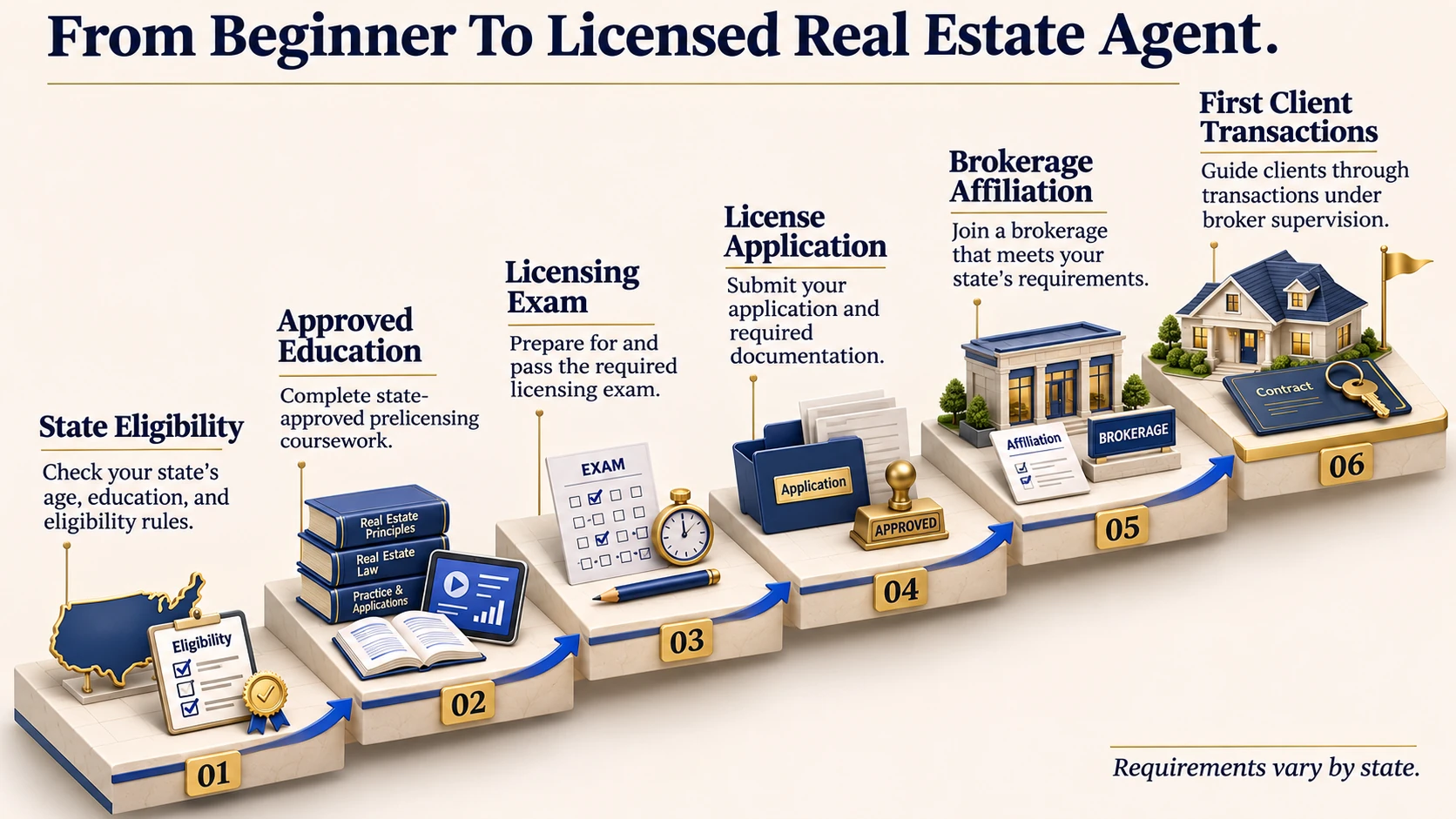
Starting a career in real estate requires more than an interest in buying and selling properties. Before representing clients, aspiring agents must complete licensing requirements established by their state. These requirements generally include approved education, an examination, background screening, and a formal application. Understanding the process can help you avoid unnecessary expenses and prepare for the responsibilities of working in the property market.
Learning how to get real estate license approval is an important first step for anyone considering this profession. Although licensing procedures differ across the United States, most states follow a similar path from education to professional authorization. Applicants should research their local regulations before enrolling in courses or scheduling examinations.
This guide explains the qualifications, educational requirements, costs, and practical steps involved in becoming a licensed real estate professional. It also covers choosing a brokerage and maintaining your license after approval.
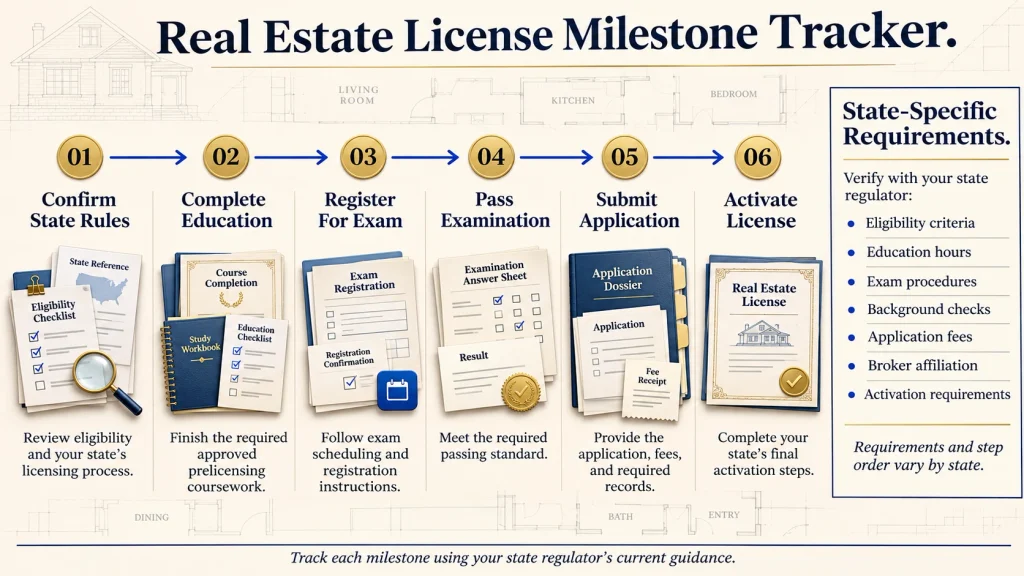
Check Your State’s Real Estate Licensing Requirements
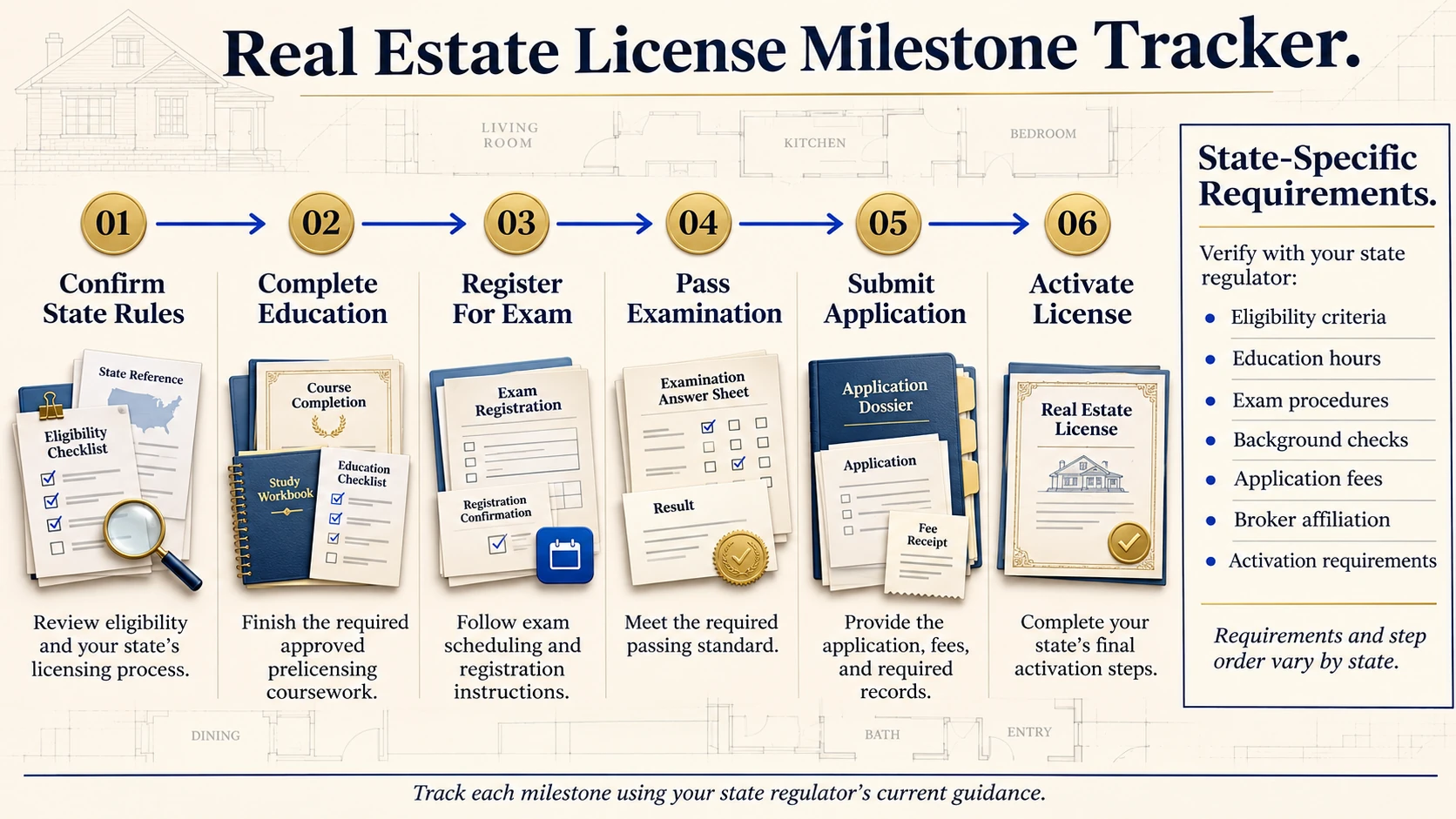
Real estate licensing is regulated by individual states rather than a single national authority. Each state determines its eligibility standards, educational requirements, examination procedures, and application fees. Most applicants must meet a minimum age requirement, commonly 18 years, although certain states have different rules. Additional conditions may include educational qualifications, background screening, and disclosure of previous criminal convictions. Before beginning the process, visit your state’s official real estate commission website to confirm current requirements.
Understanding how to get real estate license credentials starts with identifying the correct license category. Some states distinguish between salespersons, sales agents, associate brokers, and brokers. Entry-level professionals typically need a salesperson or equivalent license, while broker licenses often require additional experience. Reviewing these distinctions helps applicants select appropriate courses and avoid applying for the wrong credential. State licensing authorities also publish information about approved schools, examination providers, and application deadlines.
Complete The Required Pre-Licensing Education
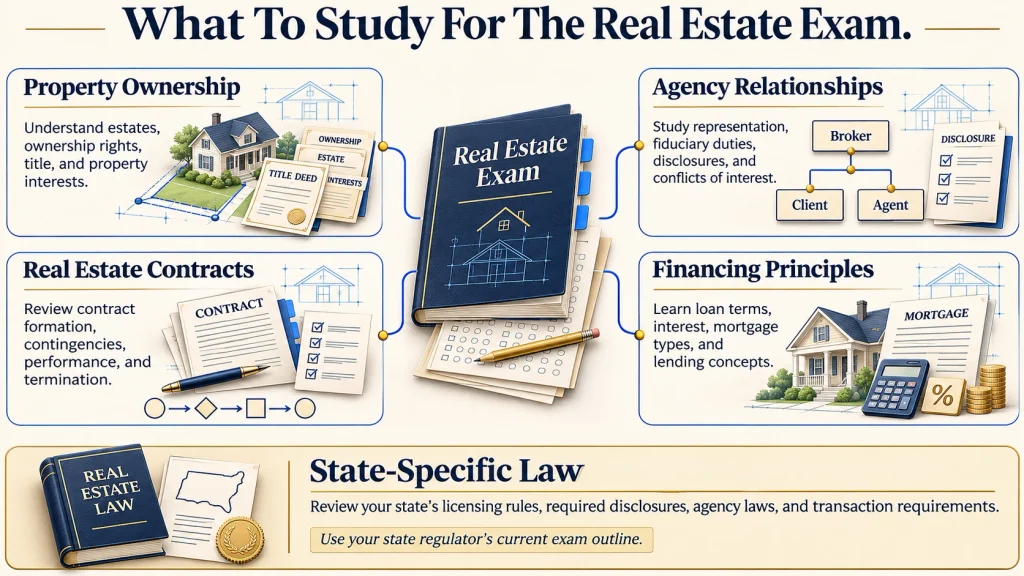
Most states require aspiring agents to complete approved pre-licensing education before taking the licensing examination. These courses introduce important subjects such as property ownership, real estate contracts, agency relationships, financing, fair housing regulations, and professional ethics. The number of required instructional hours varies considerably. Some states require relatively short programs, while others mandate more than 100 hours of coursework. Choosing a state-approved provider ensures that completed education satisfies official licensing standards.
Applicants researching how to get real estate license qualifications should compare available learning formats before enrolling. Online courses provide flexibility for individuals balancing employment or family responsibilities, while classroom programs offer direct interaction with instructors. Course prices, study materials, completion deadlines, and examination preparation support may also differ between providers. Regardless of the format, students should develop consistent study habits and understand the legal responsibilities associated with representing buyers and sellers.
Prepare For The Real Estate Licensing Examination
After completing the required education, applicants generally must pass a real estate licensing examination. Many states divide their examinations into national and state-specific portions. The national section commonly covers property rights, contracts, financing, agency relationships, and general real estate principles. State sections focus on local laws, licensing regulations, and professional responsibilities. Examination formats, passing scores, and registration procedures vary, making official testing information essential for effective preparation.
Learning how to get real estate license approval requires more than memorizing terminology. Candidates should practice applying real estate concepts to situations involving contracts, disclosures, and client representation. Practice tests, study guides, flashcards, and structured review sessions can help identify areas needing improvement. Some applicants benefit from additional examination preparation courses. If you fail an examination, many jurisdictions permit retesting, although additional fees, waiting periods, or limits may apply. Reviewing these policies beforehand helps prevent scheduling problems.
Submit Your Application And Complete Background Checks
Passing the examination is an important milestone, but applicants must still satisfy their state’s licensing procedures. Most jurisdictions require a formal application, proof of completed education, examination results, and payment of applicable fees. Fingerprinting and criminal background checks are also common requirements. Some states complete background screening before examination registration, while others conduct it during the application process. Applicants should follow the specific instructions published by their licensing authority.
When planning how to get real estate license approval, organize all necessary documents before submitting your application. Missing certificates, incorrect information, or incomplete payments can delay processing. Some states establish deadlines for applying after passing the examination, so candidates should avoid unnecessary delays. Background screening may also require additional time. Maintaining copies of applications, receipts, and official correspondence makes it easier to respond when licensing authorities request clarification or supporting documentation.
Find A Brokerage To Sponsor Your License
New real estate sales agents generally work under the supervision of a licensed broker. Depending on state regulations, applicants may need brokerage sponsorship before receiving an active license. A sponsoring brokerage provides professional oversight, transaction procedures, and access to resources needed for representing clients. Some states allow applicants to receive an inactive license before selecting a brokerage. Understanding these requirements helps prevent confusion about when you can legally begin conducting real estate activities.
Choosing a brokerage involves evaluating training opportunities, mentorship, commission arrangements, and administrative support. New agents should ask about transaction fees, marketing expenses, lead generation, and access to experienced professionals. A higher commission split does not automatically mean a brokerage offers better opportunities for beginners. Those exploring how to get real estate license credentials can also review real estate career insights to learn more about professional development. Selecting supportive supervision can make the transition from classroom education to client representation more manageable.
Understand Licensing Costs And Processing Times
The cost of becoming a licensed real estate agent depends on your state and education provider. Typical expenses include pre-licensing courses, examination registration, fingerprinting, background screening, application processing, and license activation. Initial costs may range from several hundred dollars to more than $1,000, although actual amounts vary considerably. Additional expenses may include brokerage fees, professional memberships, multiple listing service access, and marketing tools. Creating a realistic budget helps applicants prepare for both licensing and early business expenses.
The time needed to complete licensing also varies. Education requirements, course schedules, examination availability, and administrative processing all influence the timeline. Some applicants finish within a few months, while others require longer. The U.S. Bureau of Labor Statistics explains general education and licensing expectations for real estate professionals. Understanding how to get real estate license approval includes preparing for potential delays and recognizing that earning a license does not guarantee immediate income.
Activate Your License And Begin Working With Clients
Receiving licensing approval does not always mean your license is immediately active. Depending on the state, applicants may need to complete brokerage affiliation procedures or submit additional activation documentation. Before representing clients, confirm that your license status permits real estate activities. Agents should also become familiar with brokerage policies, transaction management systems, disclosure requirements, and professional recordkeeping procedures. Following these standards helps protect clients and supports compliance with applicable regulations.
After activation, new agents can begin developing practical skills through training, mentorship, and supervised transactions. Learning how to get real estate license credentials provides the legal foundation, but professional success requires communication, organization, market research, and relationship-building. Beginners should study local housing conditions, practice explaining contracts, and develop reliable methods for following up with clients. Building a professional network and maintaining accurate transaction records can also support long-term business development.
Maintain Your License Through Continuing Education
Real estate professionals must satisfy ongoing licensing requirements after receiving their credentials. Most states require periodic renewals and continuing education covering subjects such as legal updates, professional ethics, fair housing, and regulatory compliance. Some jurisdictions also require newly licensed agents to complete additional post-licensing education. Renewal deadlines and required instructional hours vary, so agents should monitor announcements from their state licensing authority and complete coursework before their credentials expire.
Understanding how to get real estate license approval is only the beginning of maintaining a professional career. Agents must continue developing their knowledge of contracts, financing, negotiation, and property markets. Experienced professionals may eventually pursue specialized education or qualify for broker licensing. Maintaining accurate records, following professional standards, and keeping up with regulatory changes are essential responsibilities. Consistent professional development helps agents serve clients effectively while protecting their ability to practice legally.

Conclusion
Becoming a licensed real estate agent involves meeting state eligibility requirements, completing approved education, passing an examination, and submitting the necessary documentation. Understanding how to get real estate license approval helps aspiring professionals prepare financially, avoid common delays, and approach each stage with confidence. Although requirements vary by state, careful planning and consistent preparation can make the process easier to manage.
For individuals interested in real estate career development, Coach Devin Hazen provides resources for exploring professional opportunities and building industry knowledge. Obtaining a license establishes the qualifications needed to begin, while practical experience, continued education, and strong client relationships support long-term growth in the real estate profession.