
Buying or selling property involves financial decisions, legal documents, negotiations, and several professionals working together. Real estate agents help clients navigate these responsibilities by providing market information, coordinating transactions, and representing their interests. Their work extends beyond arranging property tours or advertising homes. They also help clients evaluate prices, understand contractual terms, and prepare for important decisions throughout the transaction.
Understanding what is a real estate agent can help buyers and sellers decide when professional representation may be useful. It also provides valuable information for individuals considering a career in the housing industry. Real estate agents must meet state licensing requirements and work within the legal responsibilities established for their profession. Although agents often specialize in residential sales, some work with commercial properties, investment real estate, or rentals. Their specific responsibilities depend on their clients, property types, and local regulations.

The Role Of A Real Estate Agent In Property Transactions
A real estate agent is a licensed professional who assists clients with buying, selling, or renting property. Agents commonly work under the supervision of licensed real estate brokers, although licensing structures vary by state. Their responsibilities include researching property information, communicating with clients, arranging showings, and helping prepare transaction documents. They also explain market conditions and coordinate with other professionals involved in property transactions.
When discussing what is a real estate agent, it is important to recognize that agents represent clients rather than make decisions for them. Buyers decide which properties to purchase, while sellers determine whether to accept offers. Agents provide information, professional guidance, and transaction support within their legal authority. Their responsibilities may also include confidentiality, disclosure, loyalty, and reasonable care, depending on the agency relationship and applicable state laws.
How Real Estate Agents Help Home Buyers
Buyer’s agents assist people searching for homes that match their budgets, preferences, and long-term plans. They begin by discussing property requirements, preferred neighborhoods, and financial considerations. Agents then identify suitable listings, schedule property tours, and help clients compare available options. They may explain recent neighborhood sales, property conditions, and market competition to help buyers evaluate potential purchases.
Another important responsibility involves guiding buyers through offers and negotiations. Agents help prepare purchase offers, explain common contingencies, and communicate with sellers or listing agents. They also coordinate with mortgage lenders, inspectors, and settlement professionals when appropriate. Understanding what is a real estate agent becomes easier when considering the support buyers receive throughout a transaction. An experienced agent helps organize the process while ensuring clients remain responsible for their purchasing decisions.

How Real Estate Agents Support Property Sellers
Selling a property requires preparation, market research, advertising, and communication with prospective buyers. Real estate agents help homeowners evaluate comparable properties and develop listing strategies based on current market conditions. They may recommend cleaning, repairs, staging, or professional photography to improve a property’s presentation. Agents also prepare listing information and arrange property showings while keeping sellers informed about buyer interest.
Marketing is another important part of seller representation. Depending on the property and brokerage, agents may use multiple listing services, real estate websites, social media, and open houses to reach prospective buyers. They also help sellers review offers, negotiate terms, and coordinate transaction deadlines. When homeowners ask what is a real estate agent responsible for during a sale, the answer includes pricing guidance, marketing, negotiations, and transaction management. These services help sellers approach the process with better information and organization.
The Difference Between Real Estate Agents And Brokers
Real estate agents and brokers both work in property transactions, but their licensing qualifications and responsibilities differ. Agents generally hold an entry-level real estate license and work under a supervising broker. Brokers typically meet additional education, examination, or experience requirements, depending on state regulations. Qualified brokers may operate brokerages, supervise agents, and assume responsibility for certain business activities. However, specific licensing categories and supervisory rules vary across jurisdictions.
Another common distinction involves the term REALTOR®. A REALTOR® is a member of the National Association of REALTORS® who agrees to follow its professional Code of Ethics. Not every licensed real estate agent is a REALTOR®, and membership does not create a separate government-issued real estate license. Understanding what is a real estate agent also requires recognizing these professional differences. Buyers and sellers should evaluate qualifications, experience, communication, and services rather than relying exclusively on job titles or professional memberships.
Real Estate Agent Licensing And Education Requirements
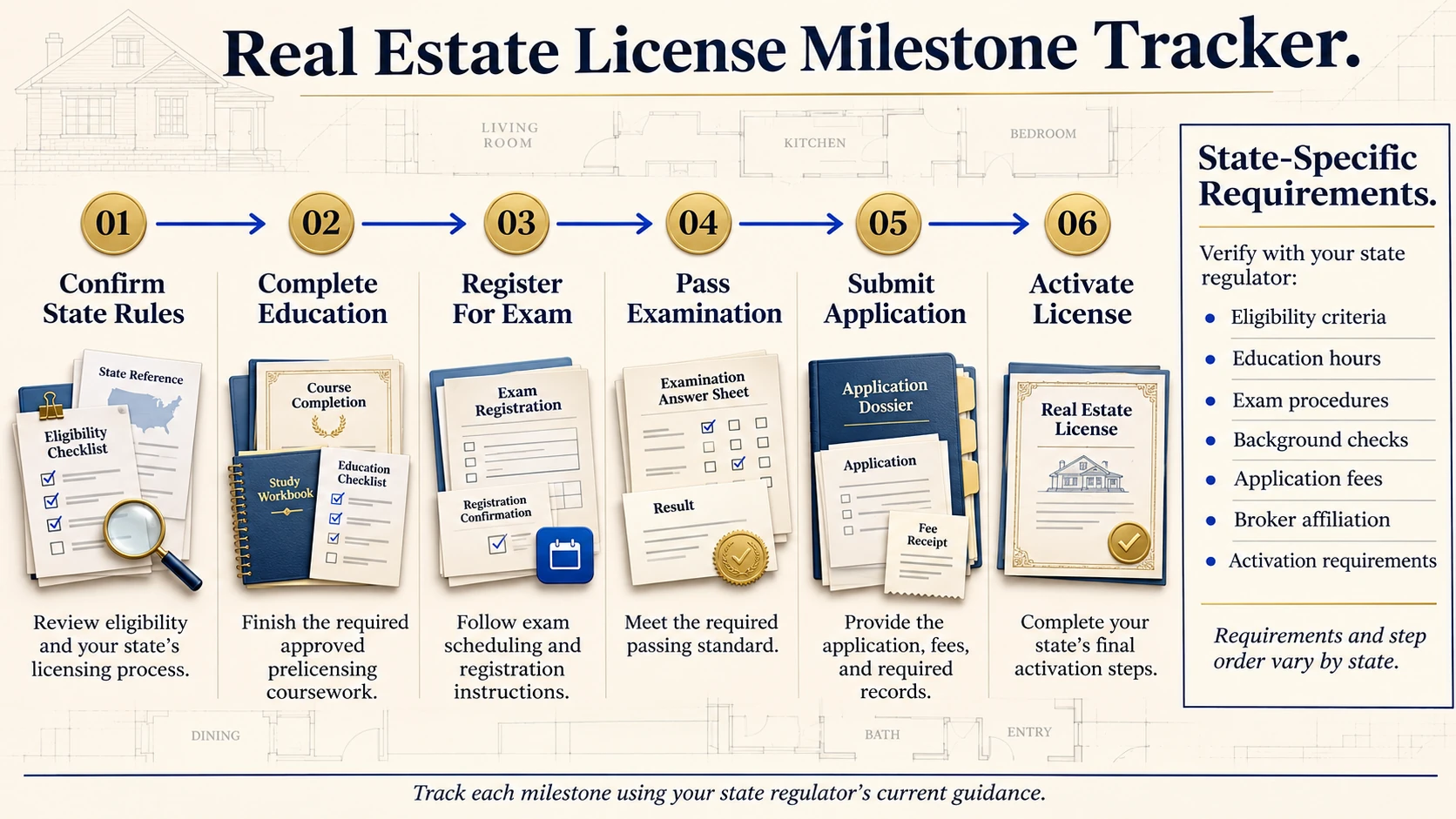
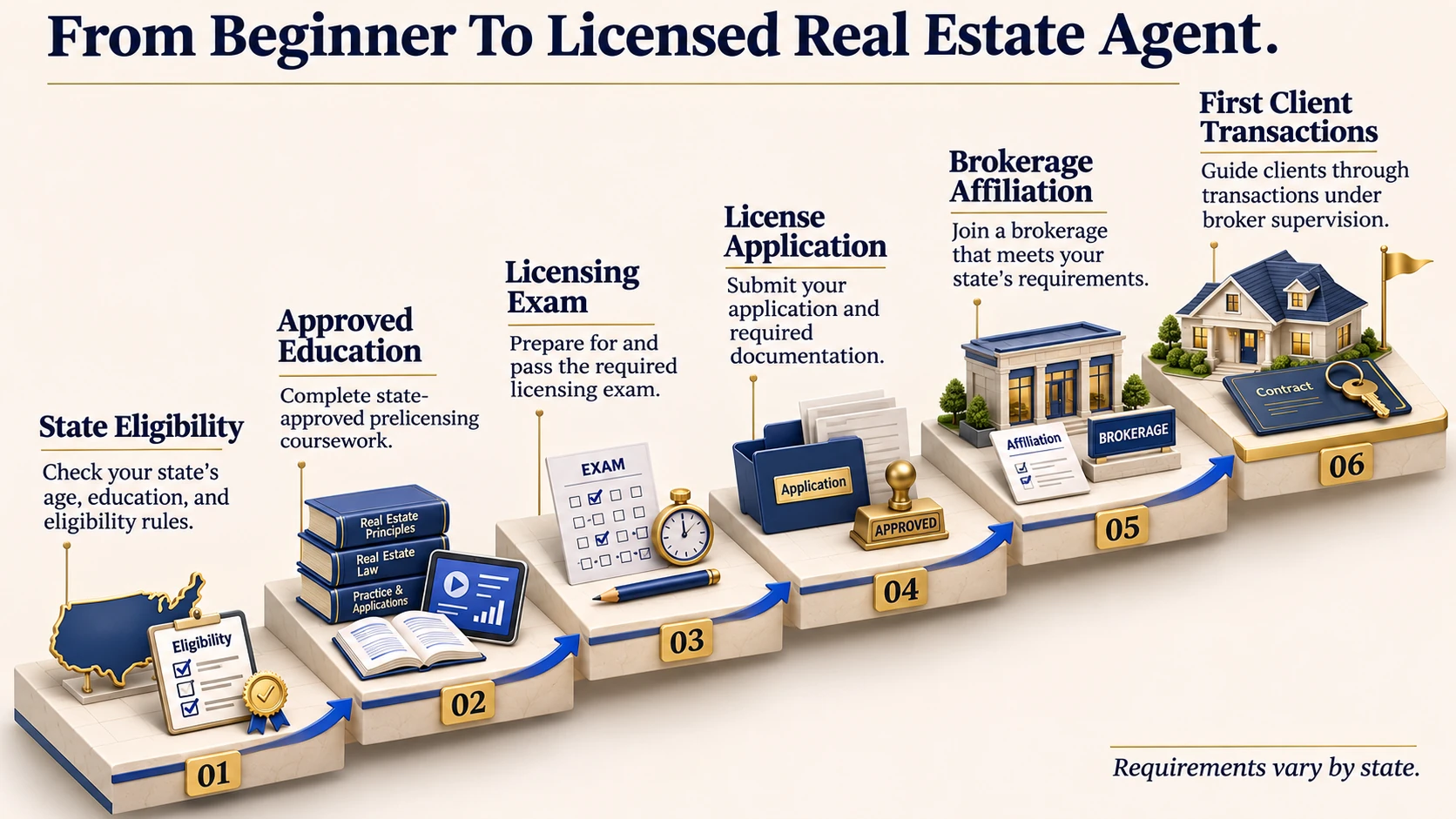
Real estate agents must satisfy licensing requirements established by the states where they practice. Most states require applicants to meet minimum age standards, complete approved pre-licensing education, pass an examination, and submit an application. Background checks or fingerprinting may also be necessary. Educational programs commonly cover contracts, property ownership, financing, agency relationships, fair housing laws, and professional responsibilities. The required number of instructional hours varies considerably between states.
Applicants researching what is a real estate agent often want to know whether a college degree is necessary. Most states do not require a four-year degree for entry-level real estate licensing, although specific educational qualifications may apply. The U.S. Bureau of Labor Statistics provides information about licensing, education, and employment in this profession. After receiving a license, agents generally must satisfy renewal and continuing education requirements to maintain their professional standing.

How Real Estate Agents Earn Money
Many real estate agents earn income through commissions associated with completed property transactions. Compensation arrangements vary and may involve negotiated percentages, flat fees, or other agreed-upon structures. Commission rates are not fixed by law or universally standardized. The amount an individual agent receives also depends on agreements with clients, brokerage compensation arrangements, and transaction-related expenses. Some agents work under salary or alternative compensation structures.
Income can fluctuate because property transactions depend on market activity, client demand, and successful closings. Agents may also pay for marketing, licensing renewals, professional memberships, technology, and brokerage services. When evaluating what is a real estate agent as a career, understanding these financial considerations is essential. New professionals should prepare for unpredictable earnings while developing their client base. Strong budgeting habits and realistic business expectations can help agents manage expenses during slower periods.
Essential Skills And Daily Responsibilities
Successful real estate agents need communication, negotiation, organization, and market research skills. Their daily responsibilities may include responding to inquiries, meeting clients, arranging property tours, preparing listings, and reviewing transaction documents. They also monitor market conditions and coordinate with lenders, inspectors, appraisers, and settlement professionals. Because clients may be available outside traditional business hours, agents often work evenings or weekends.
Building relationships is equally important. Agents generate business through networking, referrals, community involvement, and online marketing. Maintaining professional relationships requires honesty, responsiveness, and consistent service. Individuals interested in developing these abilities can explore real estate career insights for additional perspectives. Understanding what is a real estate agent involves recognizing that the profession combines sales, customer service, administrative responsibilities, and ongoing education. Agents must manage these activities while following applicable laws and brokerage policies.

Conclusion
Real estate agents are licensed professionals who help buyers, sellers, and renters navigate property transactions. Their responsibilities include market research, property marketing, negotiations, contract coordination, and client communication. Understanding what is a real estate agent provides insight into the professional knowledge and responsibilities involved in representing clients during important financial decisions.
For individuals interested in real estate careers and professional growth, Coach Devin Hazen offers resources for exploring opportunities within the industry. Becoming an effective agent requires more than earning a license. Practical experience, ethical conduct, market knowledge, and strong communication skills all contribute to professional development. Whether assisting first-time buyers or experienced property owners, real estate agents help clients navigate complex transactions with greater clarity and confidence.