Real estate transactions involve property research, negotiations, contracts, and financial decisions that require professional oversight. Real estate brokers play an important role in managing these activities while helping buyers, sellers, and licensed agents navigate the property market. Unlike many entry-level real estate agents, brokers typically hold advanced licenses that allow them to supervise other professionals or operate brokerage businesses, depending on state regulations.
Understanding what do real estate brokers do provides insight into the responsibilities involved in managing real estate transactions and supervising property professionals. Brokers may represent clients directly, oversee sales agents, review contracts, coordinate business operations, and help ensure compliance with licensing laws. Their duties depend on their license classification, brokerage structure, and professional experience.
For individuals considering advancement in real estate, learning about brokerage responsibilities can clarify the qualifications and skills required for leadership positions. The following sections explain the everyday work of brokers, their professional obligations, and their role in the real estate industry.
Supervising Real Estate Agents And Brokerage Operations
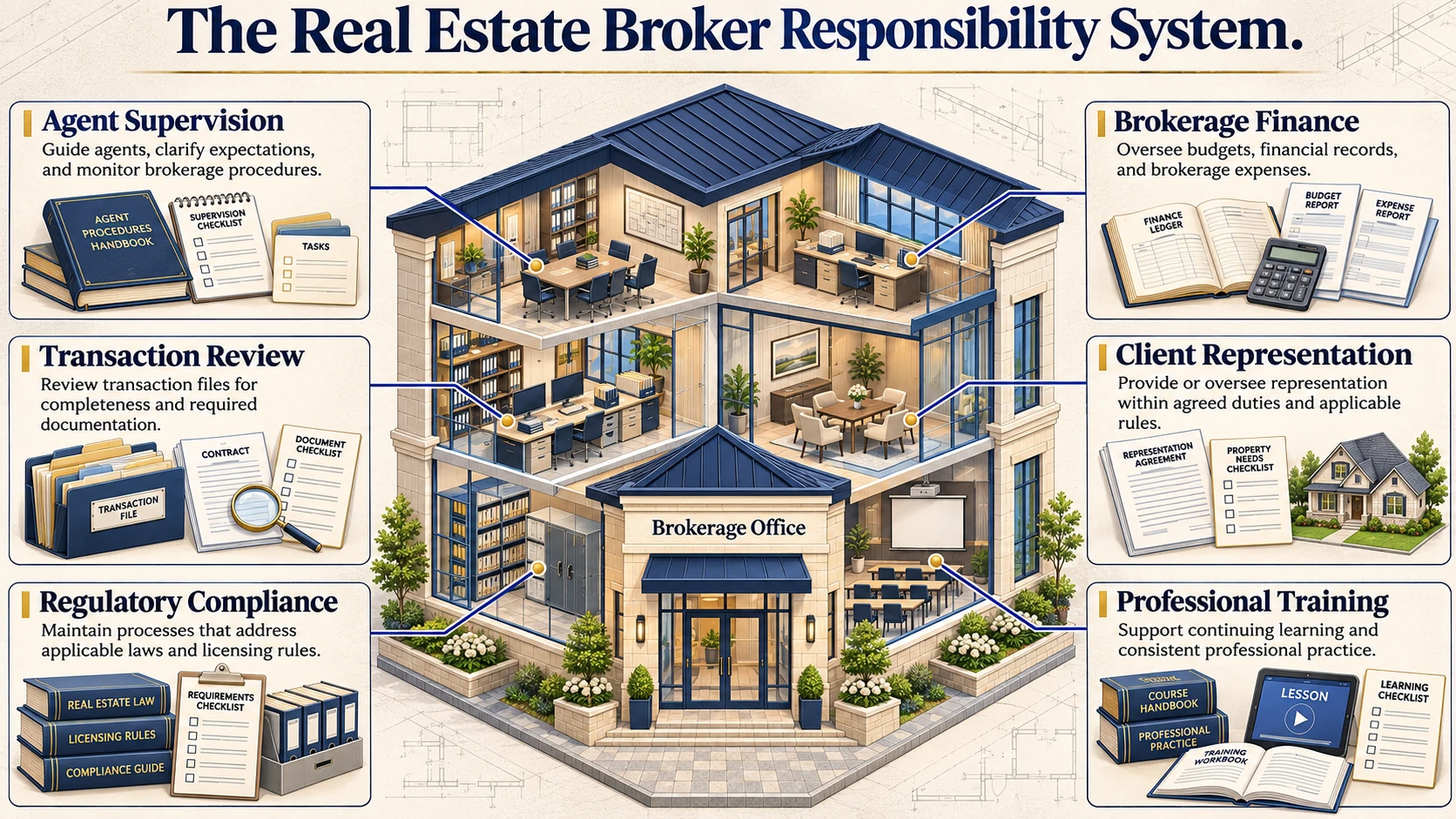
One of the primary responsibilities of real estate brokers is supervising licensed agents who work under their brokerage. Supervising brokers help ensure that agents follow state licensing regulations, brokerage policies, and professional standards. They may review transaction documents, provide guidance on client representation, and address questions involving contracts or disclosures. Brokers also establish office procedures that support consistent service and responsible business practices. The extent of their supervisory duties depends on state law and the brokerage’s organizational structure.
When examining what do real estate brokers do in a supervisory position, employee development is another important responsibility. Brokers may train newly licensed agents, provide mentorship, and help experienced professionals improve their performance. They also coordinate administrative support, establish business expectations, and monitor operational concerns. Effective supervision requires communication, organization, and the ability to identify problems before they affect clients. A well-managed brokerage provides agents with guidance while maintaining accountability for professional conduct and transaction procedures.
Helping Buyers And Sellers Complete Property Transactions
Real estate brokers can represent buyers and sellers directly when their licenses authorize those activities. They may help buyers identify suitable properties, evaluate asking prices, arrange showings, and prepare purchase offers. Brokers working with sellers can recommend listing prices, develop marketing strategies, and communicate with prospective buyers. Their experience may be particularly useful in transactions involving unusual property characteristics, complicated negotiations, or multiple parties. However, clients remain responsible for making final purchasing and selling decisions.
Understanding what do real estate brokers do for clients also involves recognizing their role in managing transaction details. Brokers may coordinate with lenders, inspectors, appraisers, attorneys, and settlement professionals to help transactions progress. They explain relevant procedures, monitor contractual deadlines, and communicate important developments. Brokers must also recognize when clients need specialized legal or financial advice. Their responsibilities extend beyond facilitating property sales because they must support informed decisions while following applicable licensing and agency requirements.

Reviewing Contracts And Maintaining Legal Compliance
Real estate brokers often oversee the preparation and handling of transaction documents within their brokerage. These documents may include listing agreements, buyer representation agreements, purchase contracts, disclosure forms, and other required records. Brokers help ensure that agents use appropriate procedures and complete documentation according to state regulations. They may also establish systems for reviewing transactions and maintaining records. Because real estate laws vary by jurisdiction, brokers must understand the requirements governing their specific business activities.
For professionals researching what do real estate brokers do behind the scenes, compliance management represents a significant responsibility. Brokers must monitor licensing status, advertising practices, agency relationships, and applicable consumer protection requirements. Depending on state law, they may also oversee trust accounts and the handling of client funds. Brokers should seek qualified legal or accounting guidance when matters exceed their professional authority. Careful oversight helps reduce administrative mistakes, supports regulatory compliance, and protects the interests of clients and brokerage professionals.
Managing Brokerage Finances And Business Development
Operating a real estate brokerage involves financial planning, budgeting, and business administration. Brokers who own or manage firms may oversee office expenses, marketing budgets, technology subscriptions, insurance, and employee compensation arrangements. They also establish commission policies and negotiate brokerage agreements where appropriate. Understanding operating costs helps brokers make informed decisions about staffing, business expansion, and available resources. Financial responsibilities can vary considerably between independent brokerages and larger real estate organizations.
Another important aspect of what do real estate brokers do involves developing business opportunities. Brokers may build relationships with property owners, investors, developers, and local professionals. They also evaluate marketing strategies, support lead generation, and identify potential growth opportunities. Business development requires balancing immediate revenue goals with long-term relationships and professional reputation. Brokers who understand both financial management and client service are better positioned to maintain organized operations while supporting their agents’ work.

Developing Agent Skills And Professional Standards
Real estate brokers frequently support the professional development of agents working within their organizations. Training may cover client communication, property valuation, contract procedures, negotiation strategies, and ethical responsibilities. New agents often benefit from guidance when handling their first transactions, while experienced professionals may need support with complicated negotiations or changing regulations. Brokers can also organize educational meetings and provide feedback to help agents improve their performance and develop stronger client relationships.
Learning what do real estate brokers do as leaders reveals the importance of coaching, accountability, and professional development. Brokers must balance individual agent independence with the need for consistent business practices. They may establish performance expectations, review client service concerns, and encourage continuing education. Effective leadership involves helping agents solve problems rather than simply monitoring sales results. Professionals exploring real estate career development resources can also learn about the skills needed for professional growth. Supporting agent development helps brokerages maintain service standards and prepare employees for additional responsibilities.
Understanding Broker Licensing And Career Opportunities
Becoming a real estate broker generally requires additional qualifications beyond those needed for an entry-level sales agent license. Many states require applicants to gain relevant real estate experience, complete approved broker education, and pass a licensing examination. Requirements differ by jurisdiction, including the amount of experience needed and the subjects covered during training. Some states also distinguish between associate brokers, managing brokers, and designated brokers, with different responsibilities attached to each classification.
For individuals considering what do real estate brokers do as a career, understanding business management is just as important as meeting licensing requirements. Brokers who establish their own firms must manage expenses, maintain records, and follow applicable business regulations. The U.S. Small Business Administration’s financial management guidance provides information about managing business finances and maintaining financial records. These skills can support brokers who plan to operate independent firms. Career opportunities may include supervising agents, managing brokerage offices, specializing in commercial transactions, or developing independent real estate businesses.

Conclusion
Real estate brokers perform responsibilities that extend beyond helping clients purchase or sell properties. They supervise agents, review transactions, manage brokerage operations, maintain regulatory compliance, and support professional development. Understanding what do real estate brokers do highlights the combination of real estate knowledge, leadership, and business management required in the profession. Their work helps maintain organized operations while supporting agents and clients throughout property transactions.
For individuals interested in advancing their real estate careers, Coach Devin Hazen offers resources related to professional growth and opportunities within the industry. Becoming a broker requires additional qualifications, practical experience, and a commitment to responsible business practices. Professionals who develop strong management skills and maintain their industry knowledge can pursue leadership opportunities while helping others succeed in real estate.