Property management is a career that combines real estate knowledge, business operations, customer service, and financial responsibility. Property managers oversee residential or commercial properties on behalf of owners, ensuring that buildings remain maintained, tenants receive appropriate support, and daily operations run efficiently. Their responsibilities often include collecting rent, coordinating repairs, managing leases, and maintaining financial records.
Learning how to become a property manager can help you understand the qualifications, experience, and professional skills required to enter this field. Unlike some real estate careers that focus primarily on property transactions, property management involves ongoing relationships with owners, tenants, contractors, and service providers.
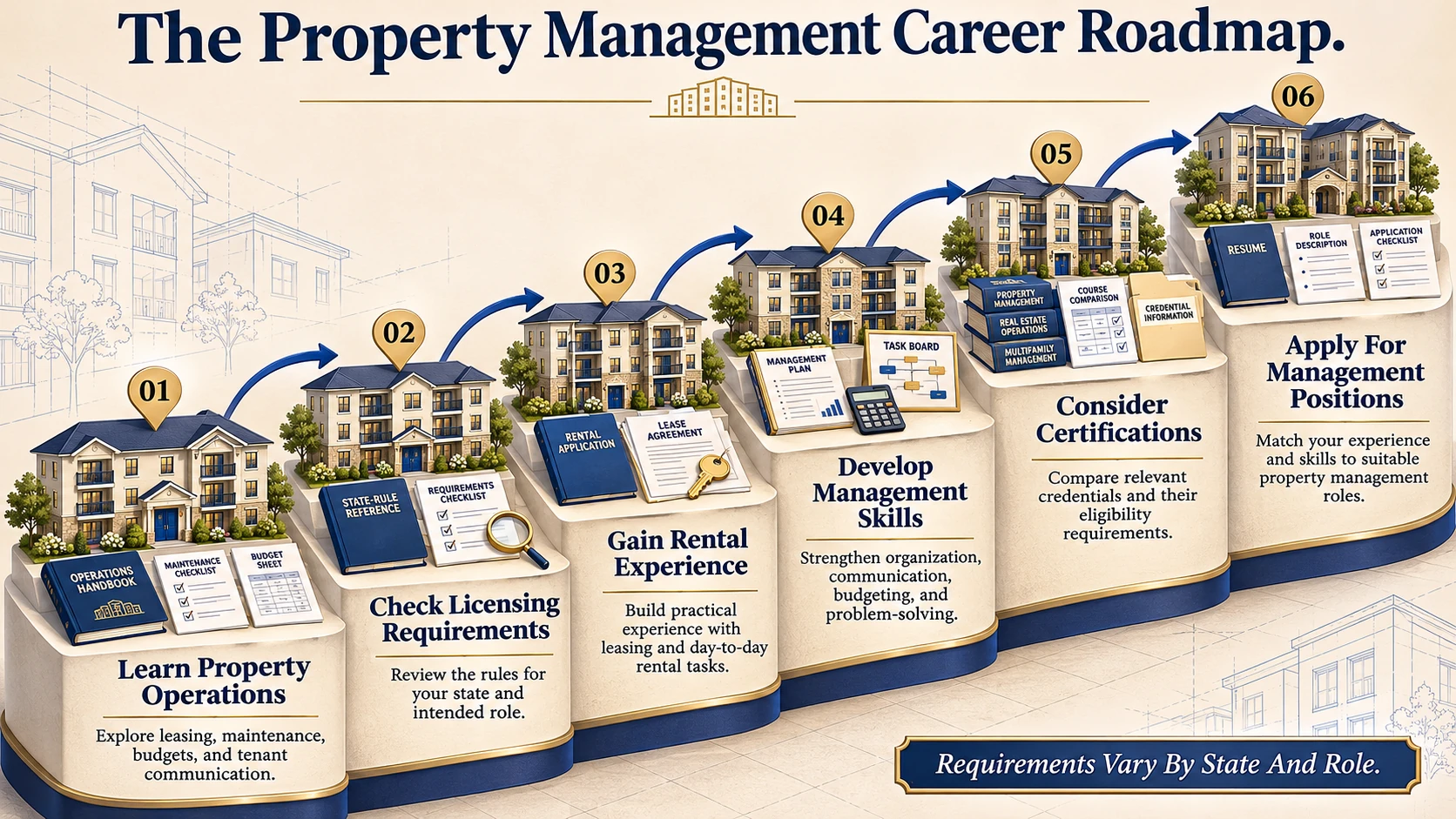
Although requirements vary by state and employer, aspiring property managers can prepare through education, practical experience, and industry training. This guide explains the essential steps involved in entering property management, from understanding licensing requirements to developing the skills needed for long-term career growth.
Learn What Property Managers Do
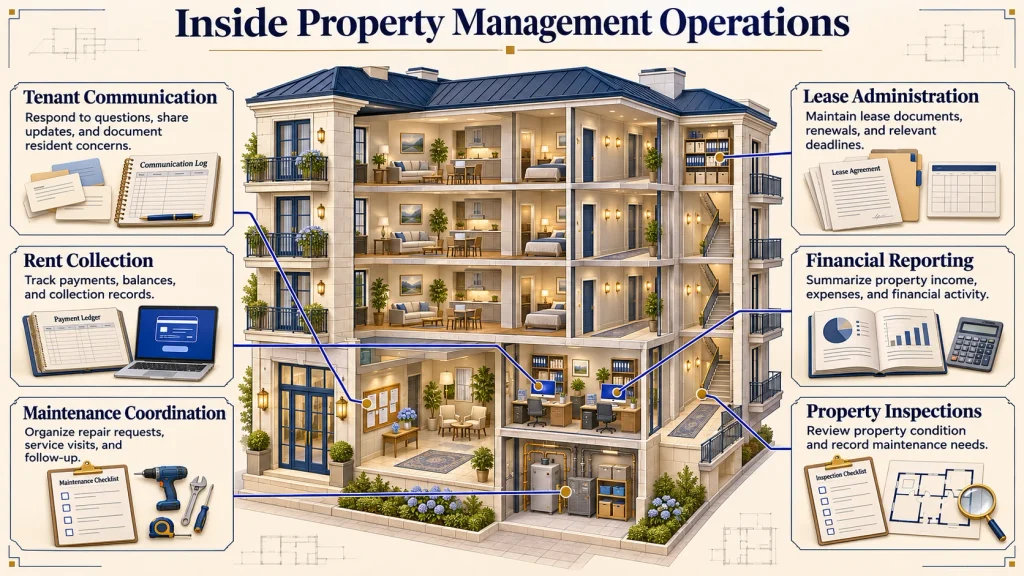
Property managers oversee the daily operations of properties owned by individuals, investors, or organizations. Their responsibilities may include advertising rental vacancies, screening applicants, preparing lease documents, collecting payments, and coordinating maintenance. They also communicate with tenants about property concerns and help owners understand operating expenses. Depending on the property, managers may supervise employees, coordinate contractors, and maintain compliance with applicable housing regulations. The specific duties depend on whether they manage apartments, single-family rentals, commercial buildings, or other properties.
Understanding how to become a property manager begins with recognizing the balance between customer service and business administration. Managers must address tenant concerns while protecting the owner’s property interests and following applicable laws. They may also prepare budgets, review financial reports, and recommend improvements. Some positions involve managing a single building, while others require overseeing multiple properties. Familiarity with these responsibilities can help aspiring professionals determine which property management roles match their interests and abilities.
Research Education And Licensing Requirements
Property management qualifications depend on the state, employer, and services being performed. Some positions require a real estate broker’s or salesperson’s license, particularly when managing rental properties for others in activities regulated by state real estate law. Other roles may qualify for exemptions, such as certain on-site employees or individuals managing properties they own. Because requirements differ significantly, applicants should consult their state’s real estate licensing authority before accepting responsibilities involving leasing, rent collection, or property representation.
When researching how to become a property manager, education is another important consideration. Many employers accept candidates with a high school diploma and relevant experience, while others prefer degrees in business administration, real estate, finance, or related fields. Coursework involving accounting, contract administration, housing regulations, and customer service can provide useful preparation. A college degree is not universally required, but additional education may improve opportunities for positions involving larger properties or more complex financial responsibilities.
Gain Experience In Real Estate And Rental Operations
Practical experience helps aspiring managers understand how rental properties operate. Entry-level positions such as leasing consultant, property management assistant, administrative coordinator, or maintenance coordinator can provide exposure to everyday responsibilities. These roles often involve communicating with tenants, organizing documents, scheduling property visits, and assisting with rental applications. Working alongside experienced professionals also provides opportunities to observe how managers handle maintenance emergencies, lease renewals, and difficult conversations.
For individuals learning how to become a property manager, gaining experience in different aspects of property operations can be particularly valuable. Understanding tenant relations, accounting procedures, and building maintenance creates a stronger foundation than focusing on only one responsibility. Employers may value candidates who demonstrate reliability, organization, and the ability to resolve problems independently. Keeping records of completed projects, software experience, and operational responsibilities can also help applicants demonstrate their qualifications when pursuing more advanced positions.
Develop Essential Property Management Skills
Successful property managers need communication, organization, financial management, and problem-solving abilities. They regularly interact with tenants, property owners, maintenance contractors, and administrative employees. Clear communication helps establish expectations, explain lease requirements, and resolve concerns before they become larger problems. Managers must also organize inspections, maintenance schedules, rental payments, and important deadlines. Strong attention to detail is particularly important when handling financial records, security deposits, and property documentation.
Learning how to become a property manager also involves developing practical decision-making skills. Unexpected repairs, tenant complaints, and payment issues may require prompt attention. Managers should evaluate available information, follow established procedures, and recognize when legal or technical expertise is necessary. Basic accounting knowledge can help with budgeting, expense tracking, and financial reporting. Familiarity with property management software is equally useful because many companies rely on digital systems to organize leases, maintenance requests, tenant communications, and payment records.

Earn Professional Property Management Certifications
Professional certifications can help property managers strengthen their knowledge and demonstrate commitment to the industry. Organizations such as the Institute of Real Estate Management and the National Apartment Association offer educational programs and credentials related to property operations. These programs may cover budgeting, leasing, maintenance planning, risk management, and professional ethics. Certification requirements vary, and some credentials require relevant work experience, examinations, or continuing education. While certifications are not always mandatory, they may be valuable when applying for positions with established management companies.
When considering how to become a property manager, choose certifications that match your intended career path. Residential apartment management, commercial property operations, and community association management involve different responsibilities. Additional training in fair housing compliance is particularly useful for residential managers. The U.S. Department of Justice provides information about the Fair Housing Act and federal protections against housing discrimination. Understanding these requirements helps property managers develop appropriate rental policies, treat applicants fairly, and recognize situations that require legal guidance.
Find Property Management Jobs And Build Industry Connections
Once you have developed relevant knowledge and experience, begin exploring property management opportunities. Apartment communities, commercial property firms, real estate investment companies, and professional management businesses frequently employ property managers or support staff. Entry-level applicants may benefit from applying for assistant property manager or leasing positions before pursuing full management responsibilities. Job descriptions can help identify the qualifications employers expect, including software experience, budgeting skills, customer service abilities, and knowledge of local rental regulations.
Networking can also support career development. Building relationships with real estate professionals, property owners, contractors, and experienced managers may help you discover employment opportunities. Industry events, educational programs, and professional associations provide opportunities to learn from others. Understanding how to become a property manager includes preparing a resume that highlights relevant responsibilities and measurable achievements. Applicants should emphasize experience with tenant communication, maintenance coordination, financial records, and administrative organization. Demonstrating practical knowledge can help distinguish candidates seeking their first management position.
Build A Long-Term Career In Property Management
Property management offers several opportunities for professional advancement. Experienced managers may progress into senior property manager, regional manager, portfolio manager, or director-level positions. Some professionals specialize in luxury residential communities, commercial buildings, affordable housing, or large rental portfolios. Advancement often requires stronger financial management abilities, leadership experience, and familiarity with property regulations. Managers who consistently maintain organized operations and positive professional relationships may become better prepared for positions involving larger responsibilities.
Developing a long-term career also requires continuing education and adapting to changes in the rental industry. Property management technology, tenant expectations, maintenance practices, and housing regulations can evolve. Professionals should regularly review their performance and identify skills that need improvement. Learning how to become a property manager provides an entry point, but professional growth depends on experience, reliability, and ongoing development. Strong managers understand that maintaining properties involves more than handling daily requests. They must also support financial planning, responsible maintenance, and effective communication between owners and residents.
Conclusion
Property management can be a rewarding career for individuals interested in real estate, business operations, and working with people. Understanding how to become a property manager involves researching licensing requirements, gaining practical experience, developing financial and communication skills, and considering relevant professional certifications. Each step helps prepare aspiring managers for the responsibilities of overseeing rental properties and supporting property owners.
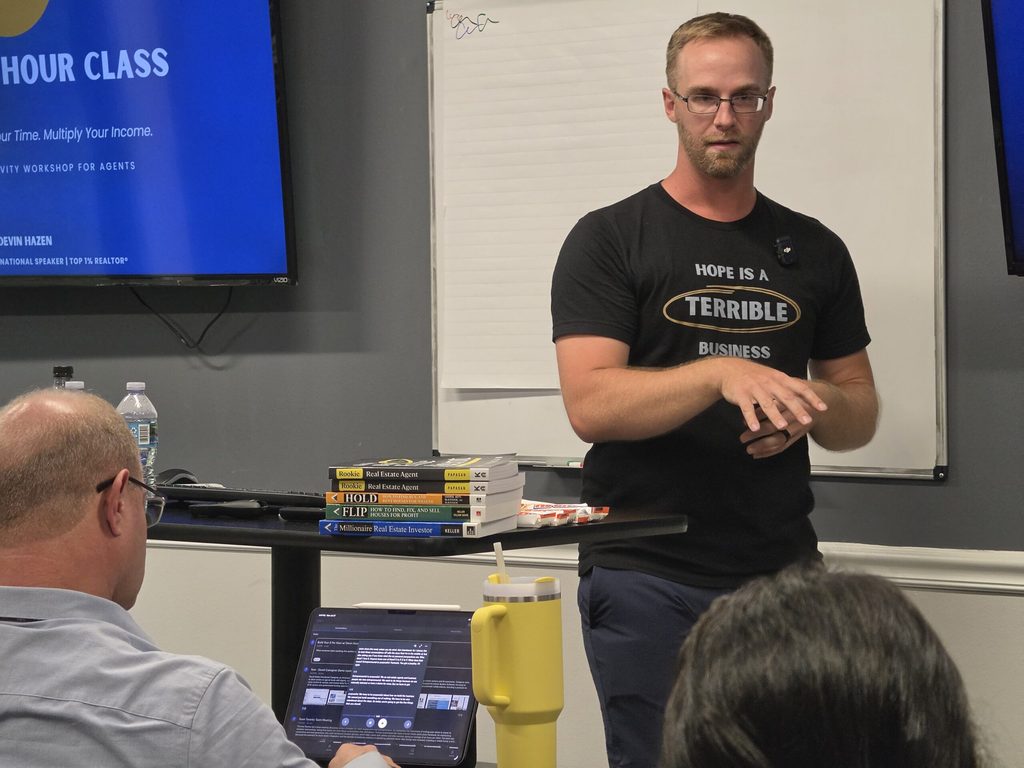
For those exploring real estate careers and professional development, Coach Devin Hazen provides resources for learning more about opportunities within the industry. Whether starting as a leasing assistant or pursuing a management position, consistent learning and practical experience are essential. By developing industry knowledge, maintaining professional standards, and building strong working relationships, aspiring property managers can establish a foundation for long-term career growth.