A career in real estate offers opportunities to work with buyers, sellers, and property investors while developing valuable business skills. Real estate agents help clients navigate property transactions, understand housing markets, negotiate agreements, and make informed decisions. Unlike many traditional careers, entering the real estate industry generally does not require a four-year college degree. However, aspiring professionals must complete specific licensing requirements before representing clients.
Learning how to become a real estate agent involves understanding state regulations, completing approved education, passing licensing examinations, and finding a brokerage that supports professional development. The process varies across the United States because each state establishes its own licensing standards.
Whether you are considering a career change or entering the workforce, understanding the necessary qualifications and responsibilities can help you prepare. This guide covers the essential steps, expected expenses, career opportunities, and practical skills needed to begin working in real estate.
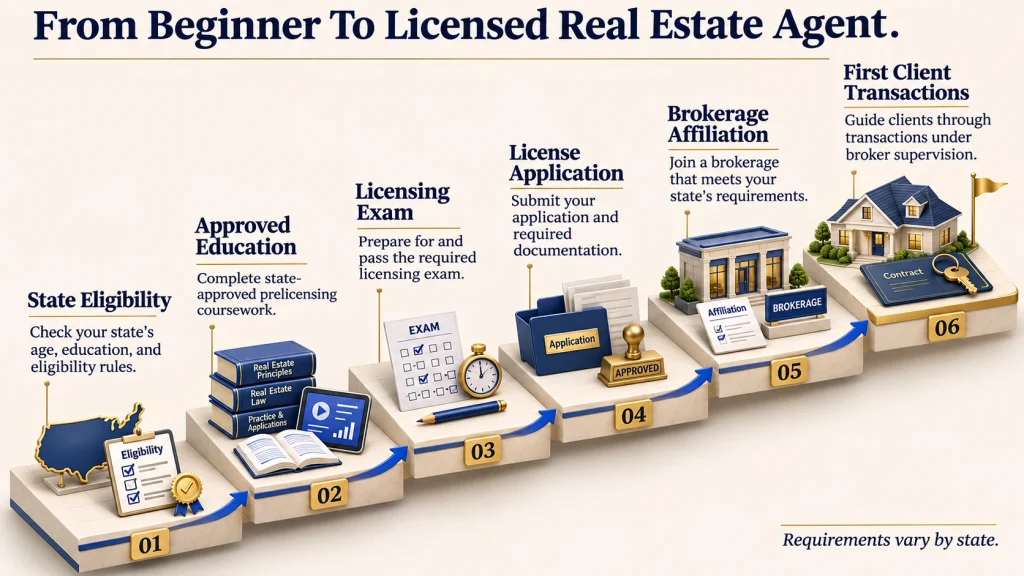
Research Your State’s Real Estate Licensing Requirements
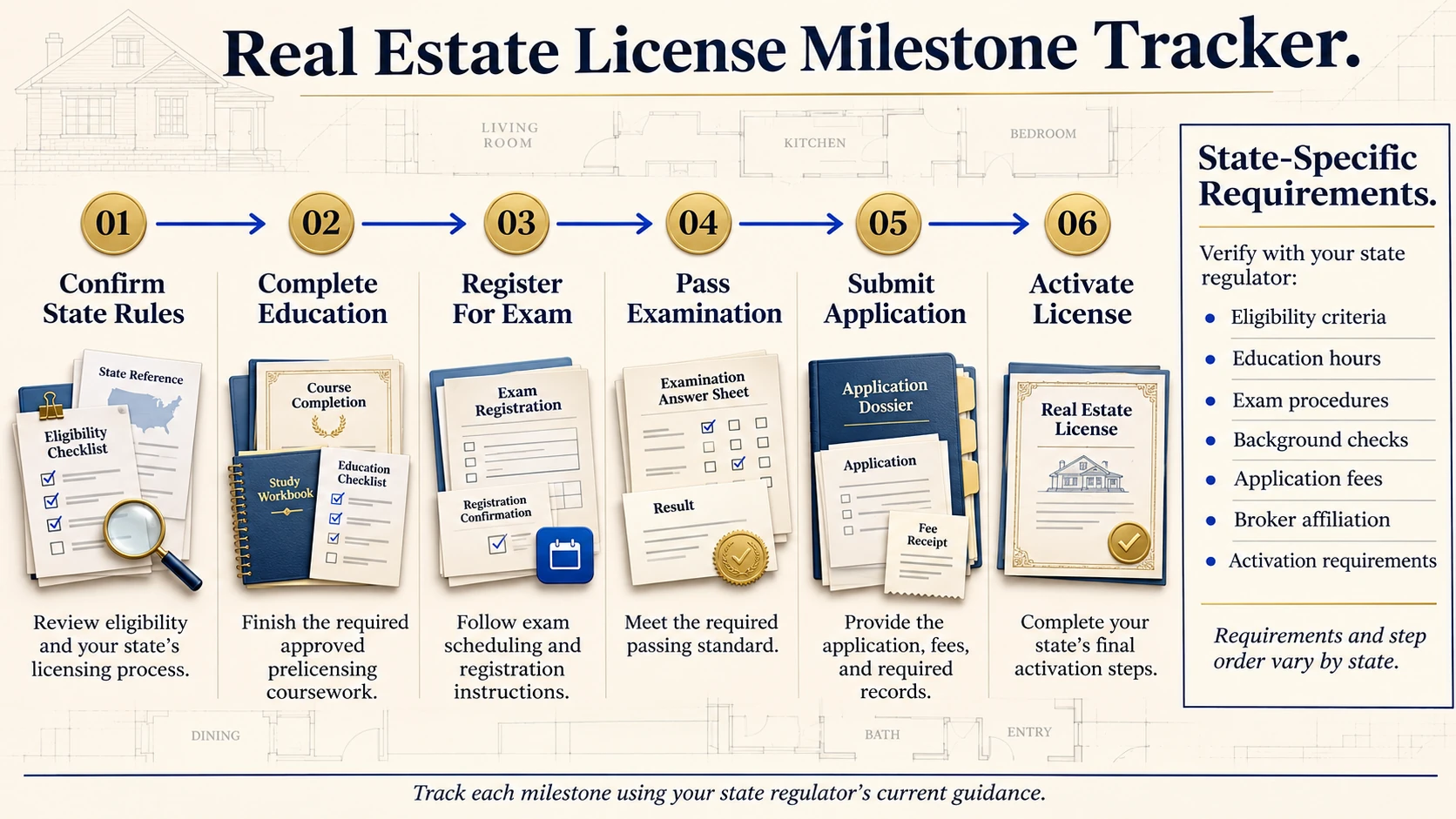
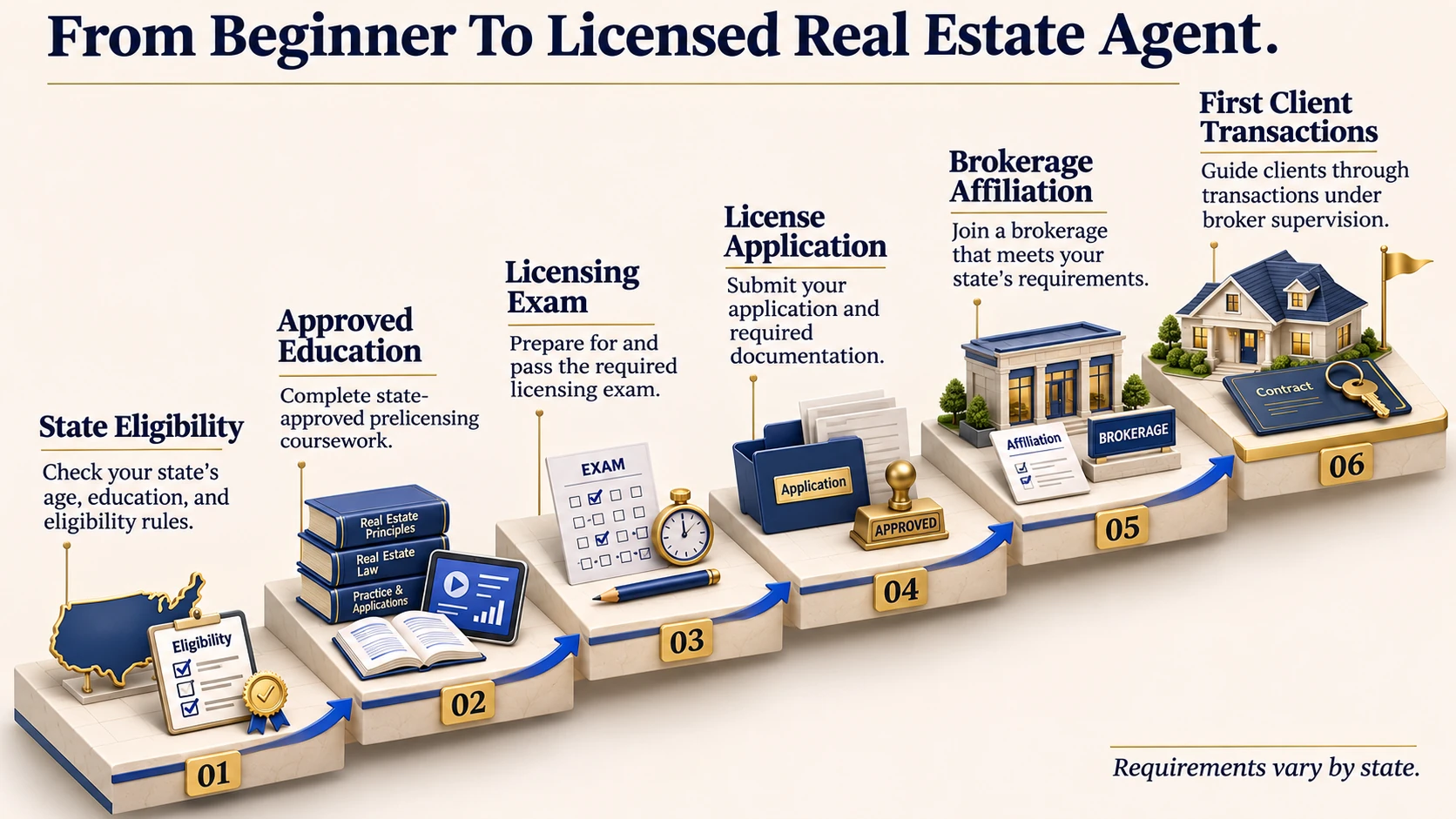
The first step toward entering the real estate profession is researching the licensing requirements in your state. Real estate licenses are issued by state regulatory authorities rather than a single national organization. Most states require applicants to meet minimum age standards, complete approved education, pass an examination, and satisfy background screening requirements. Some jurisdictions also require proof of educational qualifications or additional eligibility documentation. Checking your state’s official real estate commission website ensures that you understand the rules before investing in training.
Licensing categories can also differ between states. Entry-level professionals may be called real estate salespersons, sales agents, or brokers, depending on local regulations. Some states require new agents to work under a supervising broker, while others establish different licensing structures. When researching how to become a real estate agent, pay attention to application deadlines, approved education providers, examination requirements, and the conditions for activating your license. Understanding these details early can prevent unnecessary expenses and delays.
Complete An Approved Real Estate Pre-Licensing Course
Pre-licensing education introduces the knowledge needed to work legally and responsibly in real estate. Courses typically cover property ownership, contracts, financing, agency relationships, fair housing regulations, property valuation, and professional ethics. These subjects prepare future agents to understand the responsibilities involved in representing buyers and sellers. Required instructional hours vary considerably by state, so applicants should verify the exact number before enrolling. Choosing a state-approved education provider is essential because courses from unapproved schools may not satisfy licensing requirements.
Many schools offer online, in-person, or hybrid learning options. Online programs provide scheduling flexibility, while classroom instruction allows students to interact directly with instructors and classmates. The best format depends on your learning preferences, available time, and budget. Students should compare course costs, instructor support, examination preparation materials, and completion requirements. For individuals exploring how to become a real estate agent while maintaining another job, flexible education programs can make the transition more manageable without sacrificing the preparation needed for licensing.
Prepare For And Pass The Real Estate Licensing Examination
After completing the required education, most applicants must pass a licensing examination. The test generally evaluates knowledge of real estate principles, contracts, agency responsibilities, financing, and state-specific laws. Many states divide their examinations into national and state portions, although testing structures vary. Questions often involve practical scenarios that require applicants to apply real estate concepts rather than simply recall definitions. Reviewing the official examination outline can help identify the subjects that deserve the most attention during preparation.
Effective study methods include practice examinations, flashcards, reviewing course materials, and following a consistent schedule. Applicants should focus particularly on legal responsibilities, contract provisions, and terminology that frequently appear in examination questions. Some education providers offer additional exam preparation courses, although these are not always mandatory. If you do not pass initially, many states permit retesting subject to specific rules and fees. Understanding how to become a real estate agent includes preparing for this examination carefully because passing it is usually necessary before receiving a professional license.
Submit Your Application And Complete Background Screening
Passing the licensing examination does not automatically authorize someone to conduct real estate transactions. Applicants must complete their state’s licensing application process, which may include submitting educational certificates, examination results, identification, and application fees. Background screening is also common, and some states require fingerprinting or disclosure of criminal history. These requirements help licensing authorities evaluate whether applicants meet professional eligibility standards. The timing of background checks varies, with certain states requiring them before examination registration and others completing them during the application process.
Applicants should review every instruction carefully and maintain copies of submitted documents. Missing information, incorrect payments, or incomplete background screening can delay license approval. Some jurisdictions also impose deadlines for submitting applications after passing the examination. When planning how to become a real estate agent, allow sufficient time for administrative processing rather than assuming your license will become active immediately. Following official instructions and responding promptly to requests for additional information can help the application process proceed more efficiently.
Choose A Real Estate Brokerage That Supports Your Growth
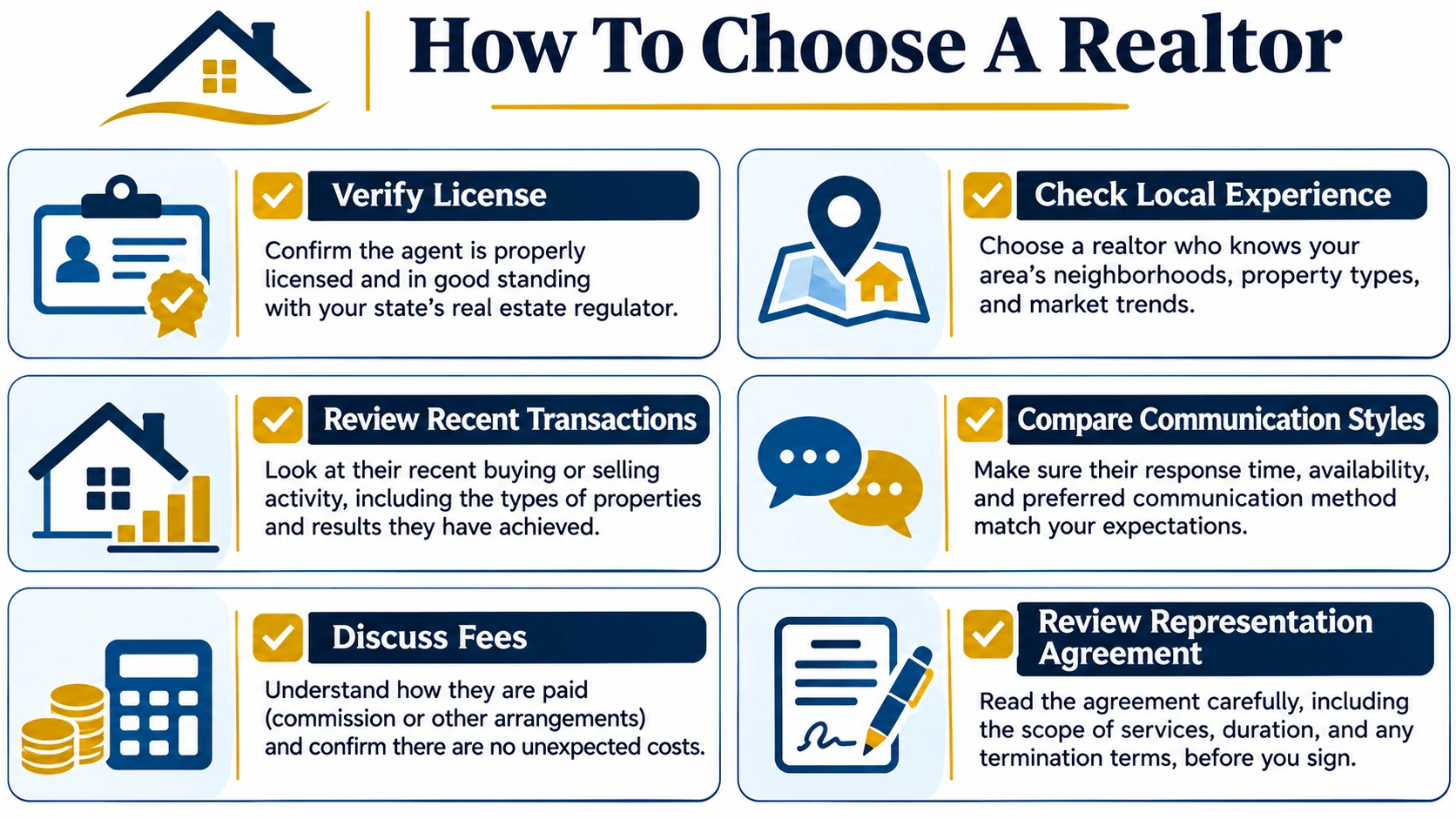
Most newly licensed sales agents must affiliate with a licensed real estate broker before conducting transactions independently. A brokerage provides supervision, transaction procedures, and access to professional resources. Selecting the right brokerage is particularly important for beginners because early training can influence how quickly they develop practical skills. When comparing companies, consider mentorship opportunities, training programs, commission arrangements, administrative assistance, and available marketing tools. A brokerage offering a higher commission split may not provide the same level of support as one focused on developing new agents.
Ask prospective brokers how they train beginners, distribute leads, manage transactions, and support agents during difficult negotiations. You should also understand potential expenses, including brokerage fees, technology subscriptions, and marketing costs. Reviewing real estate career insights can provide additional perspectives on professional development and industry expectations. For anyone researching how to become a real estate agent, finding a supportive brokerage is an important step toward gaining confidence and developing the practical experience needed to serve clients effectively.
Understand The Costs And Timeline Of Starting Your Career
Becoming a licensed real estate professional requires an initial financial investment. Common expenses include pre-licensing education, examination registration, background checks, application processing, and license activation. Depending on the state and education provider, these initial expenses may range from several hundred dollars to more than $1,000. Additional costs can include brokerage fees, professional association memberships, multiple listing service access, and marketing materials. Since expenses vary, applicants should create a budget using current information from their state licensing authority and prospective brokerage.
The time required to complete licensing also depends on state education requirements, course availability, examination scheduling, and application processing. Some applicants finish within a few months, while others need longer because of employment commitments or administrative delays. According to the U.S. Bureau of Labor Statistics, real estate agents generally need a state license, and employment arrangements can vary across the profession. Understanding how to become a real estate agent also means preparing financially for a period when income may be unpredictable, particularly while establishing a client base.
Develop The Skills Needed To Attract And Serve Clients
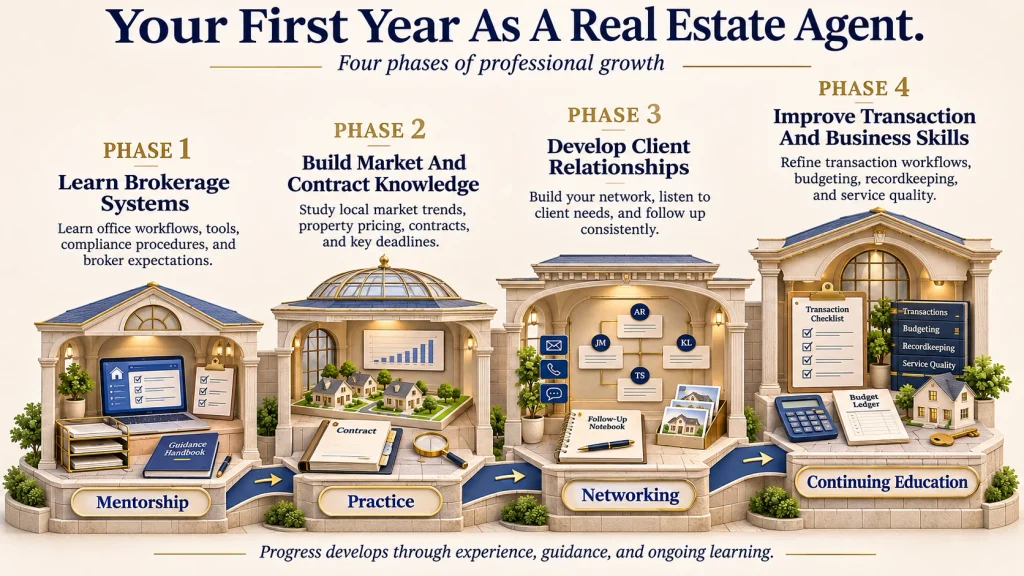
Obtaining a license establishes professional eligibility, but building a real estate career requires practical business skills. Agents must communicate effectively, research local property markets, manage appointments, and guide clients through transactions. Negotiation and problem-solving are especially valuable because property purchases often involve competing priorities, inspection concerns, and financing challenges. New professionals should spend time learning how experienced agents conduct consultations, prepare property listings, and explain contractual obligations. Strong organizational habits also help agents manage deadlines and maintain accurate records.
Client acquisition is another important responsibility. Many agents build their businesses through referrals, professional networking, community involvement, and online marketing. Creating educational content and maintaining relationships with previous clients can also support long-term growth. However, developing a reliable client base takes time and consistent effort. When considering how to become a real estate agent, remember that licensing represents the beginning rather than the completion of professional development. Combining industry knowledge with dependable customer service can help establish credibility and encourage lasting business relationships.
Maintain Your License And Build A Long-Term Career
Real estate professionals must continue meeting regulatory requirements after receiving their licenses. Most states require periodic renewal and continuing education covering legal updates, ethical responsibilities, and industry practices. Some jurisdictions also require newly licensed agents to complete post-licensing education within a specified period. Missing renewal deadlines or failing to complete mandatory coursework can affect your ability to conduct licensed activities. Keeping track of these obligations is essential for maintaining professional standing and avoiding interruptions in your career.
Long-term career development also involves expanding your knowledge of property markets, negotiation strategies, financing, and client representation. Experienced agents may pursue specialized training, develop expertise in particular property types, or eventually qualify for a broker’s license. Professionals should evaluate their business performance regularly and adjust their approach as market conditions change. Learning how to become a real estate agent provides the foundation, but continued education, ethical conduct, and consistent client service are what support professional growth over time.
Conclusion
Starting a real estate career requires careful preparation, from researching licensing requirements and completing education to passing examinations and selecting a brokerage. Understanding how to become a real estate agent helps aspiring professionals plan their expenses, manage expectations, and approach each stage with confidence. Although the process varies by state, the fundamental goal remains the same: developing the qualifications needed to represent clients responsibly.
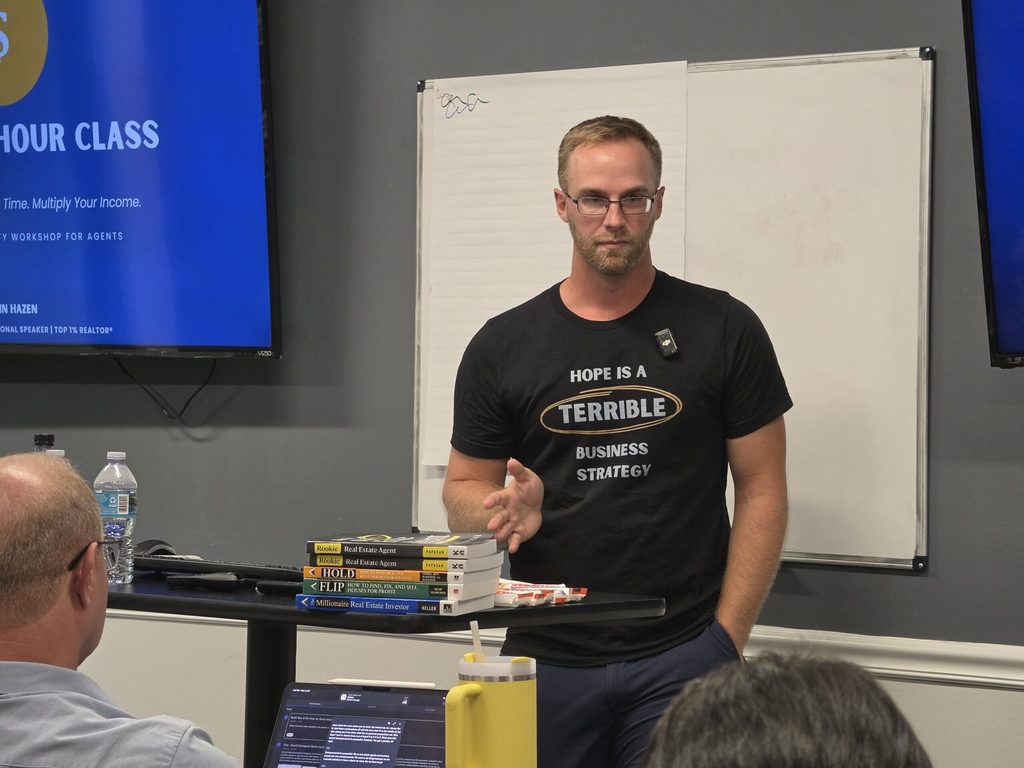
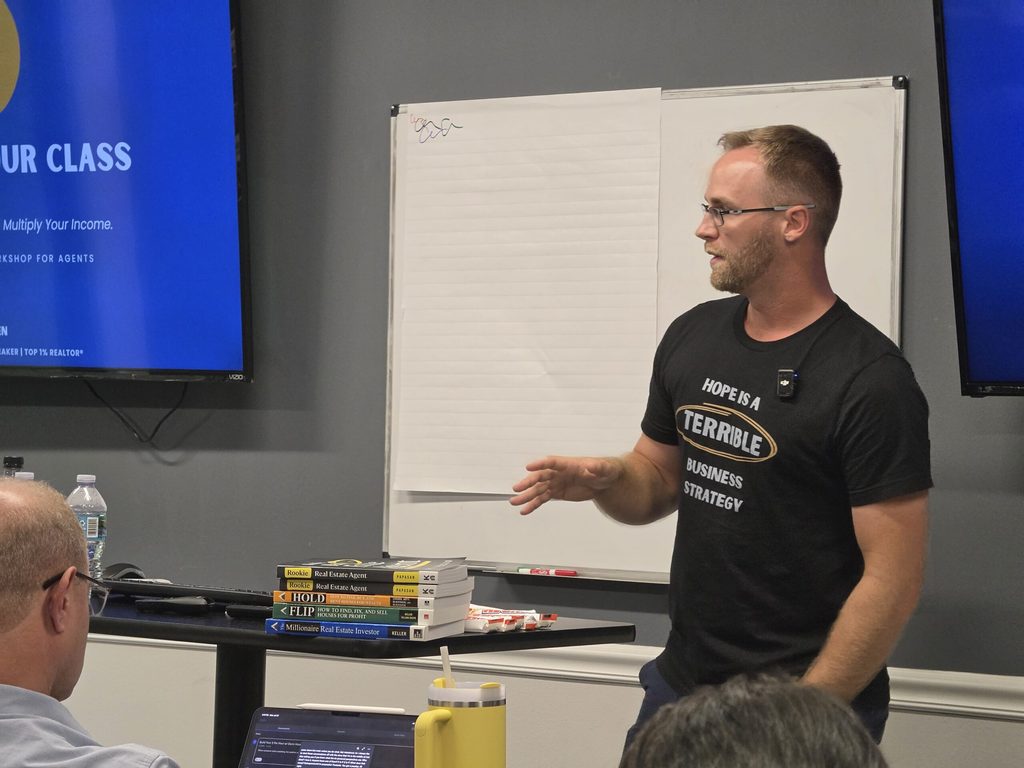
For individuals interested in exploring career opportunities and professional development, Coach Devin Hazen offers resources related to the real estate industry. Earning a license is an important achievement, but building a sustainable career depends on continued learning, practical experience, and strong client relationships. With preparation and consistent effort, new agents can establish a foundation for long-term success.