Buying or selling a home is a major financial decision, and the real estate professional you work with can influence your overall experience. A knowledgeable agent can help you evaluate property values, understand market conditions, negotiate offers, and manage the details involved in a transaction. However, not every real estate professional offers the same level of experience, communication, or service.
Learning how to choose a realtor involves looking beyond advertisements, commission rates, and personal recommendations. The right professional should understand your goals, demonstrate knowledge of your local housing market, and communicate clearly throughout the process. Whether you are purchasing your first home, relocating, or preparing to sell a property, comparing several qualified professionals can help you make a more informed decision.
This guide explains the most important factors to consider when selecting a real estate professional, including credentials, experience, marketing strategies, negotiation skills, and client relationships.
Identify Your Real Estate Goals Before Searching
Before contacting real estate professionals, determine what you need help accomplishing. Buyers and sellers have different priorities, and identifying your expectations can make the selection process easier. A first-time buyer may need detailed explanations about financing, inspections, and purchase contracts, while an experienced investor may prioritize property analysis and negotiation experience. Sellers often need guidance on pricing, property preparation, marketing, and evaluating offers. Understanding your objectives helps you identify professionals whose services match your situation.
Your preferred location, property type, budget, and timeline also matter. Someone purchasing a condominium may benefit from an agent familiar with homeowners association requirements, while a seller with a luxury property may prefer someone experienced in that market segment. When considering how to choose a realtor, begin by creating a clear picture of your goals rather than selecting the first professional you encounter. This preparation makes interviews more productive and allows you to evaluate whether an agent understands your needs.
Verify Licensing, Credentials, And Professional Experience
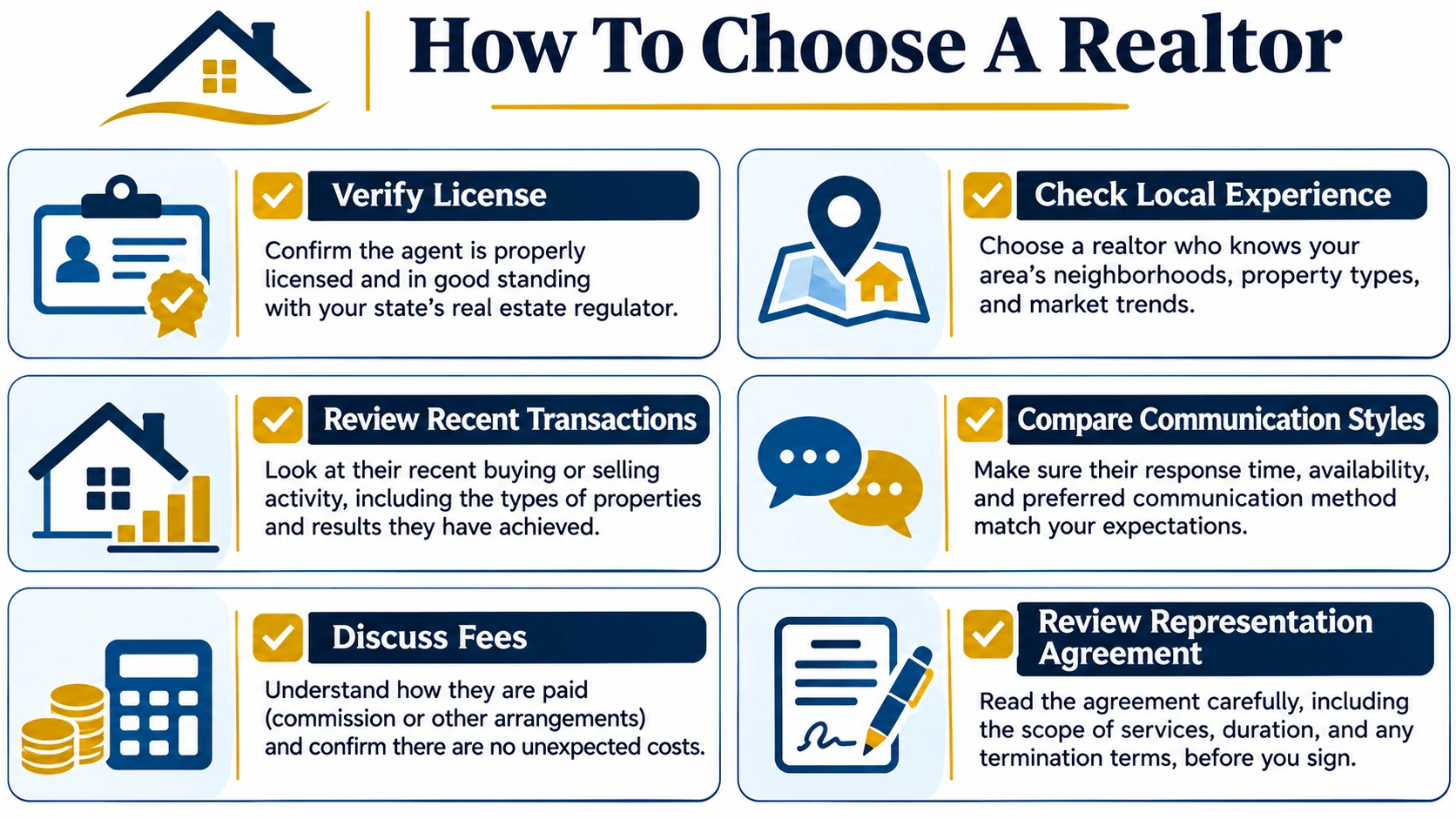
Real estate professionals must meet licensing requirements established by the states where they practice. Before hiring an agent, verify that their license is active and check for any publicly available disciplinary information through the appropriate state licensing authority. You should also understand the distinction between a real estate agent and a REALTOR®. The latter is a professional who belongs to the National Association of REALTORS® and agrees to follow its Code of Ethics. Membership alone, however, does not guarantee that someone will be the best fit for your transaction.
Experience should be evaluated in relation to your specific needs rather than simply counting years in the industry. Ask how many transactions the professional has completed recently, which neighborhoods they regularly serve, and whether they have handled properties similar to yours. A newer agent with strong brokerage support may provide excellent service, while an established professional may offer valuable experience with complicated transactions. Understanding how to choose a realtor requires considering relevant experience, professional qualifications, and the resources available to support your transaction.
Evaluate Local Market Knowledge And Pricing Expertise
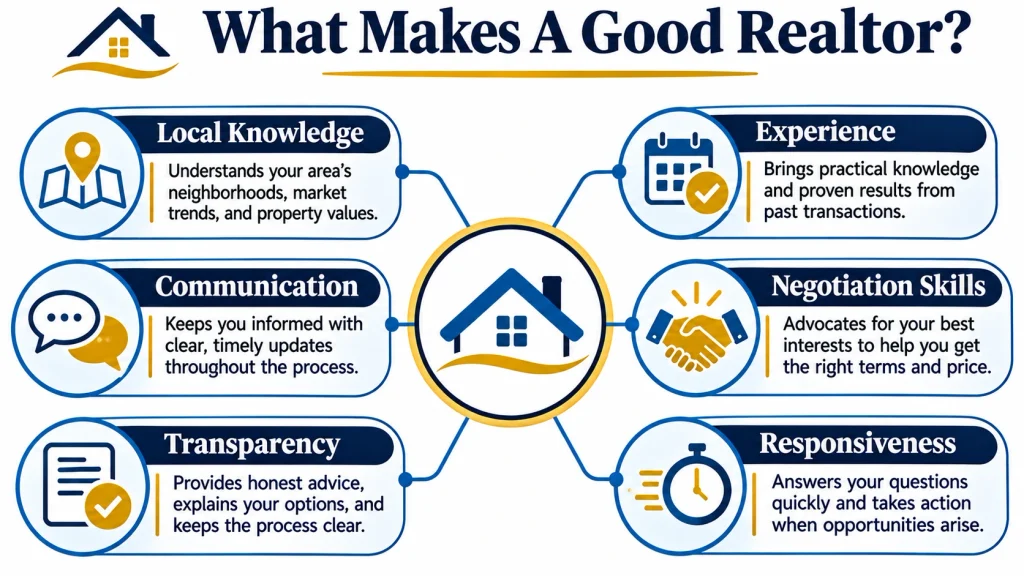
A qualified real estate professional should understand the housing market in the neighborhoods where you plan to buy or sell. Local knowledge includes recent property sales, available inventory, typical marketing periods, pricing trends, and factors influencing buyer demand. Agents should be able to explain how these conditions affect your decisions without making unrealistic predictions. For buyers, this information can help determine whether an asking price is reasonable. For sellers, it supports a listing strategy based on comparable properties and current competition.
Ask prospective agents to explain recent market activity using specific examples. Sellers can request a comparative market analysis showing similar properties and their sale prices. Buyers can ask about recent transactions involving homes within their preferred price range. Pay attention to whether the professional explains the reasoning behind recommendations instead of presenting unsupported figures. One important part of learning how to choose a realtor is identifying someone who can interpret market information clearly and help you make decisions based on evidence rather than pressure.
Compare Communication Styles And Client Availability
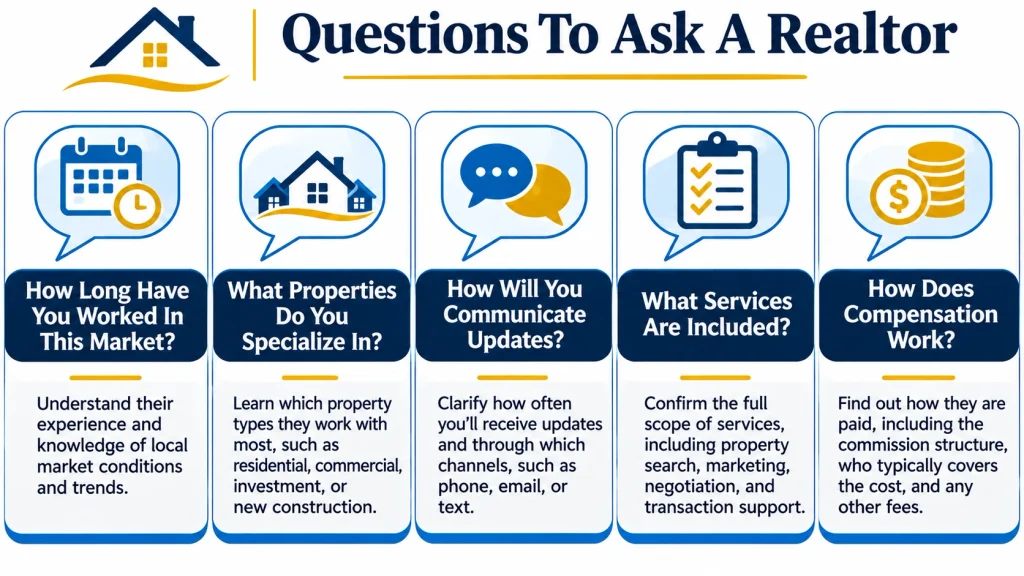
Clear communication is essential during real estate transactions because important decisions often involve deadlines, documents, and coordination among several professionals. Before selecting an agent, ask how frequently you can expect updates and which communication methods they prefer. Some clients appreciate regular telephone conversations, while others prefer emails or text messages. Neither approach is necessarily better, but expectations should be established early. You should also ask who will respond when your primary agent is unavailable and whether other team members will handle parts of your transaction.
Notice how prospective agents communicate during your initial conversations. Do they answer questions directly, explain unfamiliar terms, and listen carefully to your concerns? Are they realistic about their availability and willing to discuss potential challenges? An agent who responds quickly during an interview may still have limited capacity to manage additional clients, so ask about their current workload. When evaluating how to choose a realtor, prioritize consistent communication and reliability over promises of constant availability. A professional relationship works best when both parties understand how information and decisions will be handled.
Review Marketing Strategies And Property Search Methods
If you are selling a home, ask each agent to explain their proposed marketing strategy. Effective property marketing may include professional photography, accurate listing descriptions, multiple listing service exposure, online advertising, scheduled showings, and open houses when appropriate. The right combination depends on the property, local market conditions, and available resources. A strong agent should explain why particular methods are suitable rather than promising that every marketing activity will automatically attract buyers or increase the sale price.
Buyers should evaluate how agents identify properties and arrange showings. Ask whether they monitor new listings, communicate about suitable homes, and help assess properties before scheduling visits. An effective buyer’s agent should also explain potential concerns involving property condition, location, pricing, or resale considerations without making decisions on your behalf. Understanding how to choose a realtor means reviewing the actual services being offered, not simply comparing promotional materials. Look for a practical approach that reflects your property requirements and the realities of the local market.
Examine Negotiation Skills And Transaction Management
Real estate transactions involve negotiations that extend beyond the purchase price. Buyers and sellers may discuss inspection findings, financing contingencies, closing dates, repairs, and other contractual conditions. A capable agent should understand how these terms affect the transaction and communicate available options without creating unnecessary conflict. Ask prospective professionals how they approach multiple offers, unexpected inspection issues, or disagreements between parties. Their responses can reveal whether they rely on careful preparation and communication or make unrealistic promises about achieving particular outcomes.
Transaction management is equally important because missed deadlines or incomplete documentation can create costly problems. Agents often coordinate with lenders, inspectors, appraisers, title professionals, and attorneys while tracking contractual obligations. They should recognize when clients need specialized legal or financial advice. The Consumer Financial Protection Bureau’s homebuying resources provide useful information about financing and closing decisions. When researching how to choose a realtor, consider how the professional manages complicated situations, communicates risks, and keeps clients informed throughout the transaction.
Check Client Reviews, References, And Service Agreements
Online reviews and personal recommendations can provide useful insights into an agent’s service, but they should not be your only evaluation method. Look for recurring comments about communication, professionalism, market knowledge, and problem-solving. A single negative review does not necessarily indicate poor service, just as consistently positive ratings do not guarantee a suitable match. Ask prospective agents whether they can provide references from previous clients who completed similar transactions. Speaking with those clients may help you understand what working with the agent is actually like.
Before agreeing to representation, carefully review the proposed service agreement. Depending on the transaction, this may involve a buyer representation agreement or a listing agreement. Pay attention to the agreement’s duration, scope of services, compensation terms, cancellation provisions, and any exclusivity requirements. Commission arrangements are negotiable and should be explained clearly before you sign. Reviewing real estate guidance and professional insights may also help you prepare relevant questions. Knowing how to choose a realtor includes understanding the professional relationship and your contractual obligations before making a commitment.
Interview Multiple Realtors Before Making Your Decision
Meeting with several real estate professionals gives you an opportunity to compare their qualifications, approaches, and personalities. Prepare consistent questions about recent transactions, local experience, communication, marketing, and fees. Ask each professional to describe how they would approach your particular situation, including any challenges they anticipate. Their answers should demonstrate practical knowledge and realistic expectations. Avoid making a decision based solely on confidence, sales presentations, or promises of unusually favorable outcomes.
Your final choice should reflect both professional qualifications and personal compatibility. A suitable agent should respect your priorities, explain recommendations, and give you enough information to make independent decisions. Consider whether the individual appears organized, understands your timeline, and communicates without applying unnecessary pressure. Learning how to choose a realtor ultimately means finding someone whose experience, services, and working style support your goals. Taking time to compare candidates can help establish a more productive relationship throughout the buying or selling process.

Conclusion
Choosing a real estate professional requires careful consideration of experience, local market knowledge, communication, negotiation abilities, and service agreements. Understanding how to choose a realtor can help buyers and sellers avoid rushed decisions and identify someone capable of supporting their specific needs. Interviewing multiple candidates and reviewing their qualifications provides a stronger foundation than relying on advertisements or recommendations alone.
For additional perspectives on real estate careers and professional development, Coach Devin Hazen offers helpful resources for individuals exploring the industry. Whether purchasing a first home or preparing to sell an existing property, working with a qualified professional who understands your priorities can make the process more organized, informed, and manageable.