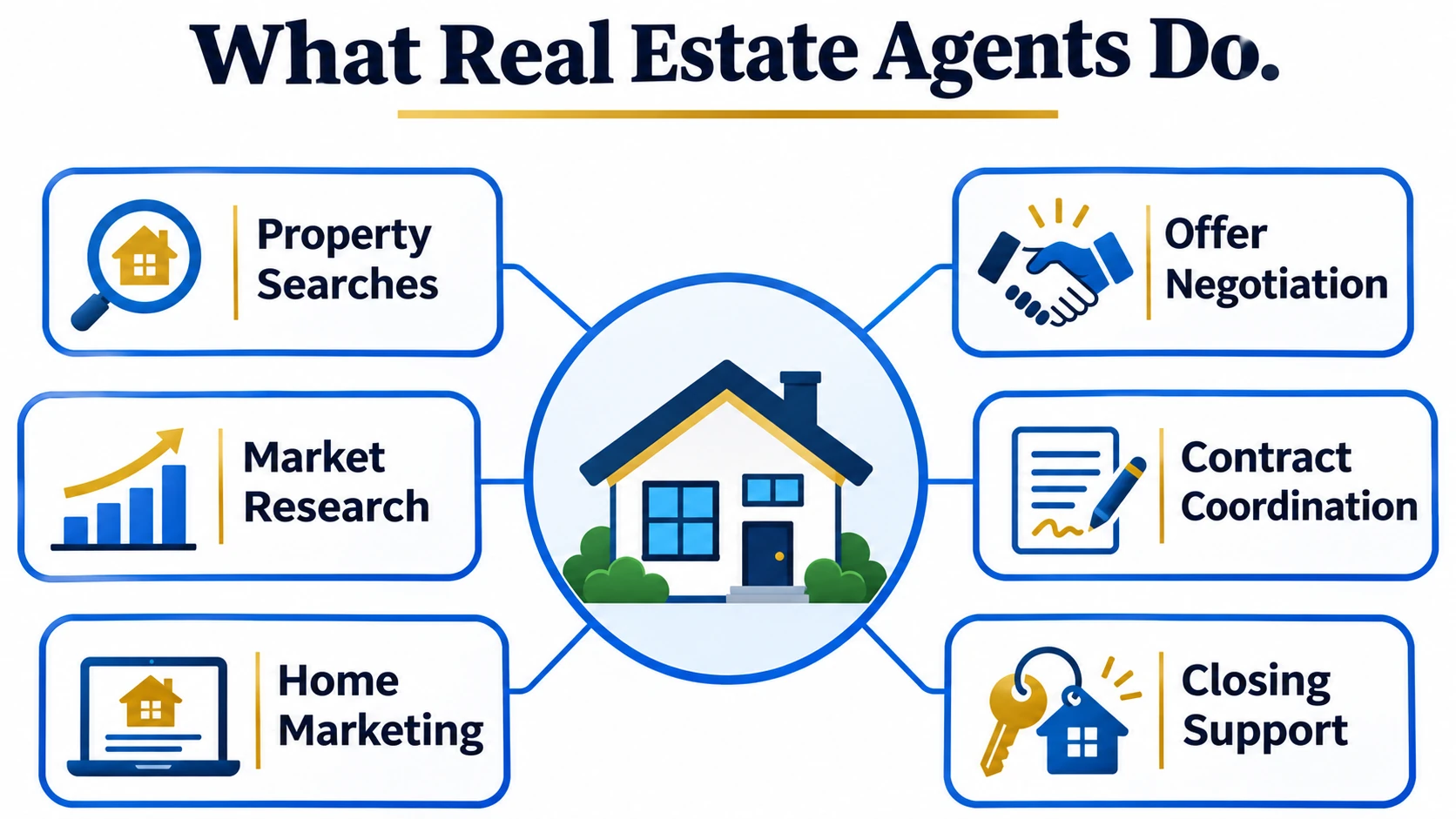
Real estate agents help people buy, sell, and sometimes rent properties while guiding them through complex financial and legal transactions. Their responsibilities extend beyond showing homes or placing listings online. Agents research local housing markets, evaluate property prices, negotiate offers, coordinate inspections, and communicate with everyone involved in a transaction. They also help clients understand important decisions that can affect their financial future.
For anyone considering a career in property sales, knowing what do real estate agents do provides a clearer picture of the profession. Although agents often have flexible schedules, their work requires organization, communication, market knowledge, and consistent attention to client needs. Some professionals specialize in residential properties, while others focus on commercial buildings, investment opportunities, or rental transactions. Understanding these responsibilities can help aspiring agents decide whether real estate matches their interests and career goals.
Helping Buyers Find The Right Property
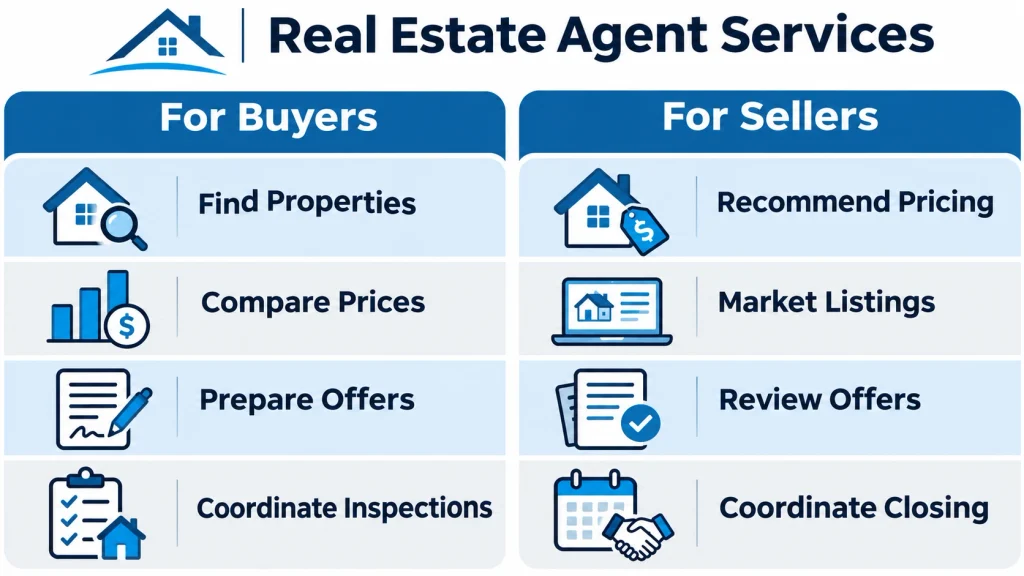
One of the most important responsibilities of a real estate agent is helping buyers identify properties that match their needs and financial circumstances. Agents begin by discussing preferred locations, budgets, property sizes, lifestyle requirements, and long-term goals. They use this information to search available listings, arrange property tours, and explain differences between potential homes. Agents may also help buyers understand neighborhood characteristics, property taxes, homeowners association requirements, and market conditions. Rather than simply presenting available houses, experienced professionals help clients evaluate whether a property represents a suitable purchase.
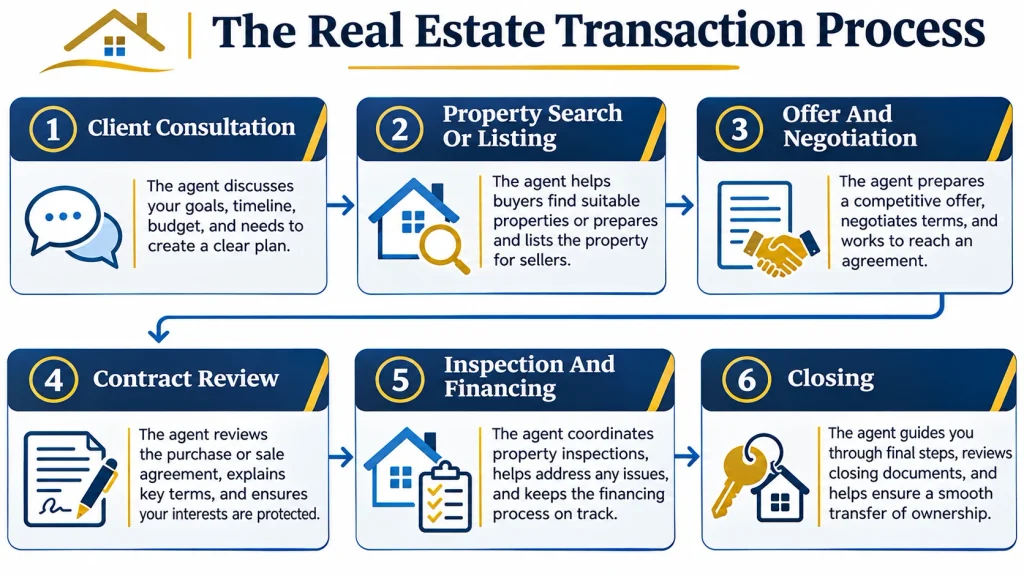
Buyer’s agents also guide clients through the purchasing process, which can involve mortgage preapproval, making competitive offers, and reviewing contract terms. They communicate with listing agents, lenders, inspectors, and other professionals to keep transactions moving forward. When buyers encounter unexpected problems, such as inspection concerns or financing delays, agents help identify available options and coordinate appropriate next steps. Understanding what do real estate agents do for buyers reveals how much planning and communication take place before a property purchase reaches closing.
Assisting Sellers With Pricing And Property Marketing
Selling a property requires careful preparation, particularly when homeowners want to attract qualified buyers while receiving a competitive price. Real estate agents research comparable properties, review recent sales, and evaluate current market conditions to recommend an appropriate listing strategy. They also discuss improvements that could strengthen a property’s presentation, such as cleaning, minor repairs, professional photography, or staging. While agents can provide pricing recommendations, sellers ultimately decide their asking price and whether to accept an offer.
Marketing is another major responsibility. Agents prepare property descriptions, coordinate photographs, arrange showings, and advertise listings through appropriate channels. Depending on brokerage resources and property characteristics, marketing may include multiple listing services, real estate websites, social media, and open houses. Agents also communicate with interested buyers and their representatives, answer property questions, and provide feedback from showings. When examining what do real estate agents do for sellers, these activities demonstrate how agents combine market research, advertising, and negotiation to support successful transactions.
Researching Property Values And Local Market Conditions
Real estate agents must understand the housing markets where they operate. Property values can change because of inventory levels, buyer demand, interest rates, economic conditions, and neighborhood developments. Agents regularly review recent sales, active listings, pending transactions, and average marketing periods to identify relevant trends. This information helps them explain whether buyers face strong competition or sellers may need to adjust their expectations. Accurate market knowledge also allows agents to provide realistic recommendations rather than relying on assumptions about property prices.
A common research method involves preparing a comparative market analysis, often called a CMA. Agents compare a property with similar homes based on location, size, condition, features, and recent sales activity. Although this analysis can help inform listing prices and purchase offers, it is not the same as a formal appraisal completed by a licensed or certified appraiser. For professionals wondering what do real estate agents do beyond client meetings, ongoing market research represents a significant part of their responsibilities. Agents who understand local trends can communicate more effectively and help clients make informed decisions.
Negotiating Offers And Managing Real Estate Contracts
Negotiation plays an essential role in property transactions because buyers and sellers often have different priorities. Agents help clients evaluate offers, review proposed terms, and communicate counteroffers. Negotiations may involve purchase prices, closing dates, contingencies, repairs, seller concessions, or included property features. An effective agent considers the client’s objectives while explaining the potential benefits and risks of different arrangements. Although agents provide guidance, clients make the final decisions about accepting or rejecting contractual terms.
Contract management requires similar attention to detail. Agents help prepare or complete permitted transaction documents, monitor deadlines, and coordinate signatures according to applicable state laws and brokerage procedures. They must also recognize situations requiring assistance from attorneys, lenders, inspectors, or other qualified professionals. Real estate agents are not automatically authorized to provide legal advice simply because they hold a real estate license. When people ask what do real estate agents do during negotiations, the answer includes communication, documentation, deadline management, and helping clients understand the transaction process.
Coordinating Inspections, Financing, And Closing Procedures
After a buyer and seller reach an agreement, several important steps usually remain before ownership transfers. Agents help coordinate property inspections, appraisal appointments, financing updates, title-related communication, and closing preparations. They monitor transaction deadlines and maintain contact with the professionals responsible for completing these tasks. If an inspection identifies problems or an appraisal creates financing concerns, agents communicate the situation and help clients consider their contractual options. Their involvement can reduce confusion during a period when multiple parties must work together.
Agents also help clients prepare for the final stages of the transaction. This may include arranging a final walkthrough, confirming that agreed-upon repairs have been addressed, and communicating with settlement professionals about scheduling. The Consumer Financial Protection Bureau’s homebuying resources explain important mortgage and closing considerations that buyers should review independently. Understanding what do real estate agents do during closing highlights their coordinating role. Agents support the process, but lenders, title professionals, attorneys, and settlement providers remain responsible for their respective services.
Building Client Relationships And Generating New Business
Real estate agents spend considerable time developing relationships with potential clients and maintaining contact with previous customers. Unlike professions where work arrives through a fixed schedule, many agents must actively generate business opportunities. Their activities may include attending community events, networking with local professionals, maintaining websites, creating educational content, and responding to inquiries. Referrals can also become an important source of business when satisfied clients recommend an agent to friends or relatives. These efforts require consistency because property transactions do not always occur immediately after an initial conversation.
Client relationships depend on trust, responsiveness, and professional conduct. Agents must listen carefully, explain unfamiliar processes, and provide timely updates without making promises they cannot guarantee. They also need to respect confidentiality and comply with fair housing requirements when marketing properties or working with prospective buyers and renters. Aspiring professionals exploring real estate career insights can benefit from learning how communication and business development contribute to long-term growth. Understanding what do real estate agents do between transactions makes it clear that relationship management is an ongoing responsibility.
Managing Daily Schedules And Professional Responsibilities
A real estate agent’s typical workday can include client calls, property research, listing appointments, home tours, marketing activities, and transaction follow-ups. However, schedules often change depending on client availability and active deals. Some appointments occur during evenings or weekends because buyers and sellers may work during regular business hours. Agents must balance these demands with administrative tasks, continuing education, and business planning. Professionals who work independently within a brokerage often need strong time-management skills to maintain consistent service across multiple clients.
Licensed agents must also follow state regulations, brokerage policies, and professional obligations. These responsibilities can include maintaining transaction records, handling disclosures properly, protecting confidential information, and completing required continuing education. Income may fluctuate because many agents earn commissions rather than fixed salaries, although compensation arrangements vary. For someone researching what do real estate agents do every day, the profession involves a combination of customer service, sales, research, administration, and regulatory compliance. Successful agents develop routines that support both their clients and their business operations.
Conclusion
Real estate agents perform a wide range of responsibilities that help buyers and sellers navigate property transactions. From researching market conditions and marketing listings to negotiating contracts and coordinating closings, their work requires communication, organization, and professional knowledge. Understanding what do real estate agents do also reveals the importance of building relationships, maintaining licensing requirements, and adapting to changing housing markets.
For individuals considering this career, Coach Devin Hazen offers resources for exploring professional development and opportunities in real estate. While earning a license provides the foundation, building practical skills and gaining experience are essential for long-term success. Real estate can offer meaningful career opportunities for professionals willing to serve clients, manage responsibilities, and continue learning throughout their careers.